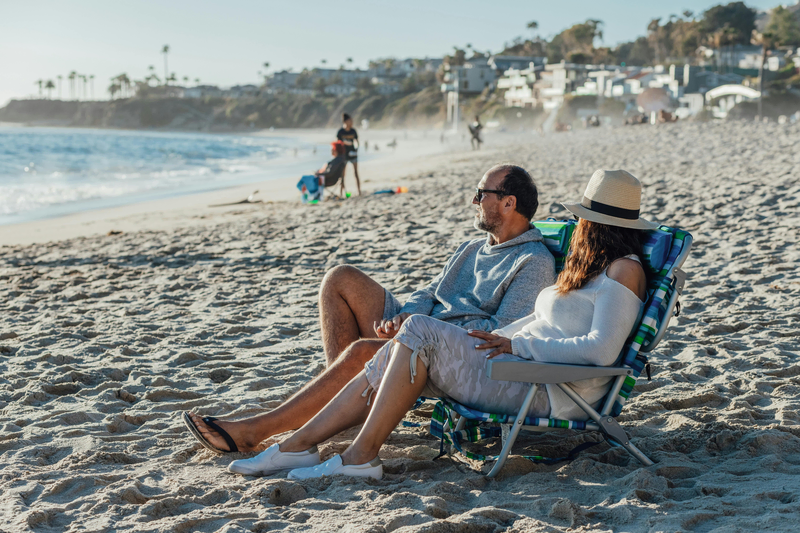
Heading south for winter means leaving your home behind for months at a time. This annual migration brings sunshine and warmth but also requires serious preparation to protect your property. From winterizing pipes to securing doors and windows, the tasks add up quickly when you’re planning an extended absence.
Forgetting even small details can lead to big problems while you’re away. A frozen pipe can cause thousands in water damage, while piled-up mail signals to burglars that nobody’s home. That’s why having a complete checklist matters so much for snowbirds preparing to leave.
Our guide to winter home maintenance offers additional tips for protecting your property. Ready to prep your home like a pro? Follow this complete snowbird checklist to leave confidently knowing your property stays safe all winter long.

Your Complete Snowbird Prep Guide
We’ve organized this checklist into easy sections covering everything you need before heading south. Jump to any section below to focus on specific preparation tasks.
- Home Security & Winterization: Protect against cold damage and break-ins
- Pre-Departure Cleaning: Deep clean to prevent pests, mold, and odors
- Mail & Utilities Management: Forward mail, pause services, and manage deliveries
- Finances & Legal Prep: Handle bills, insurance updates, and important documents
- Vehicle & Travel Prep: Get your car road-ready or prepare for flights south
- Packing Essentials: Light layers for warm destinations and must-have items
- Final Walkthrough: Last-minute checks before locking up and leaving
Download Your Complete Snowbird Checklist
Want a printable version to reference while preparing your home for a long vacation? Download our comprehensive snowbird checklist PDF to keep handy as you work through each preparation task.
👉 Download your complete snowbird checklist
This downloadable guide includes all phases from exterior winterization to final departure with checkboxes for easy tracking.
Home Security & Winterization
Protecting your property from cold damage and break-ins ranks as the most important preparation step when leaving your home. And taking the time to secure your home now prevents costly problems and gives you peace of mind all winter.
Secure Your Home
Make sure your home is safe, energy-efficient, and ready while you’re away. Here are a few simple steps to protect your home during your absence.
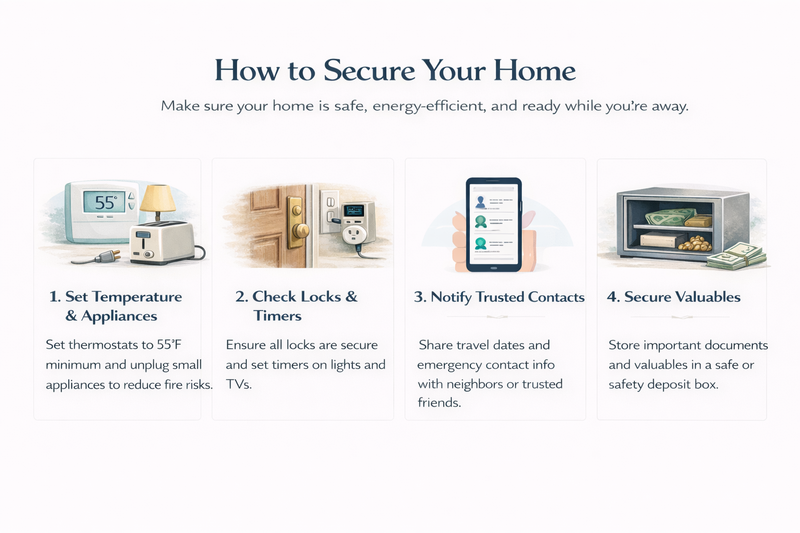
1. Set Temperature & Appliances
Set your thermostat to 55°F minimum to prevent pipes from freezing without wasting energy. This temperature keeps your home warm enough while significantly reducing heating bills. Additionally, unplug small appliances and electronics to reduce fire risks.
2. Check Locks & Timers
Check all windows and doors to ensure locks work properly while adding extra security measures where needed. Install timers on lights and TVs to create the appearance that someone’s home, programming them for different times throughout the evening.
3. Notify Trusted Contacts
Notify trusted contacts or neighbors about your departure dates and leave emergency contact information with them. Ask someone reliable to check on your property weekly, looking for signs of problems like broken windows or unusual activity. Meanwhile, some snowbirds also notify local police through non-emergency lines about extended absences.
4. Secure Valuables
Store jewelry, important documents, and firearms in a quality safe or bank safety deposit box. Cover mail slots and remove “Welcome” mats that give burglars places to check for hidden keys. These simple steps eliminate obvious signs that your home sits empty.
Maintain Exterior Perimeters
Your home’s outside appearance tells potential burglars whether anyone’s watching the property. Start by trimming bushes and trees that block windows, since overgrown landscaping provides cover for break-ins. Then mow your lawn short and arrange for regular snow removal service so your property doesn’t look abandoned.
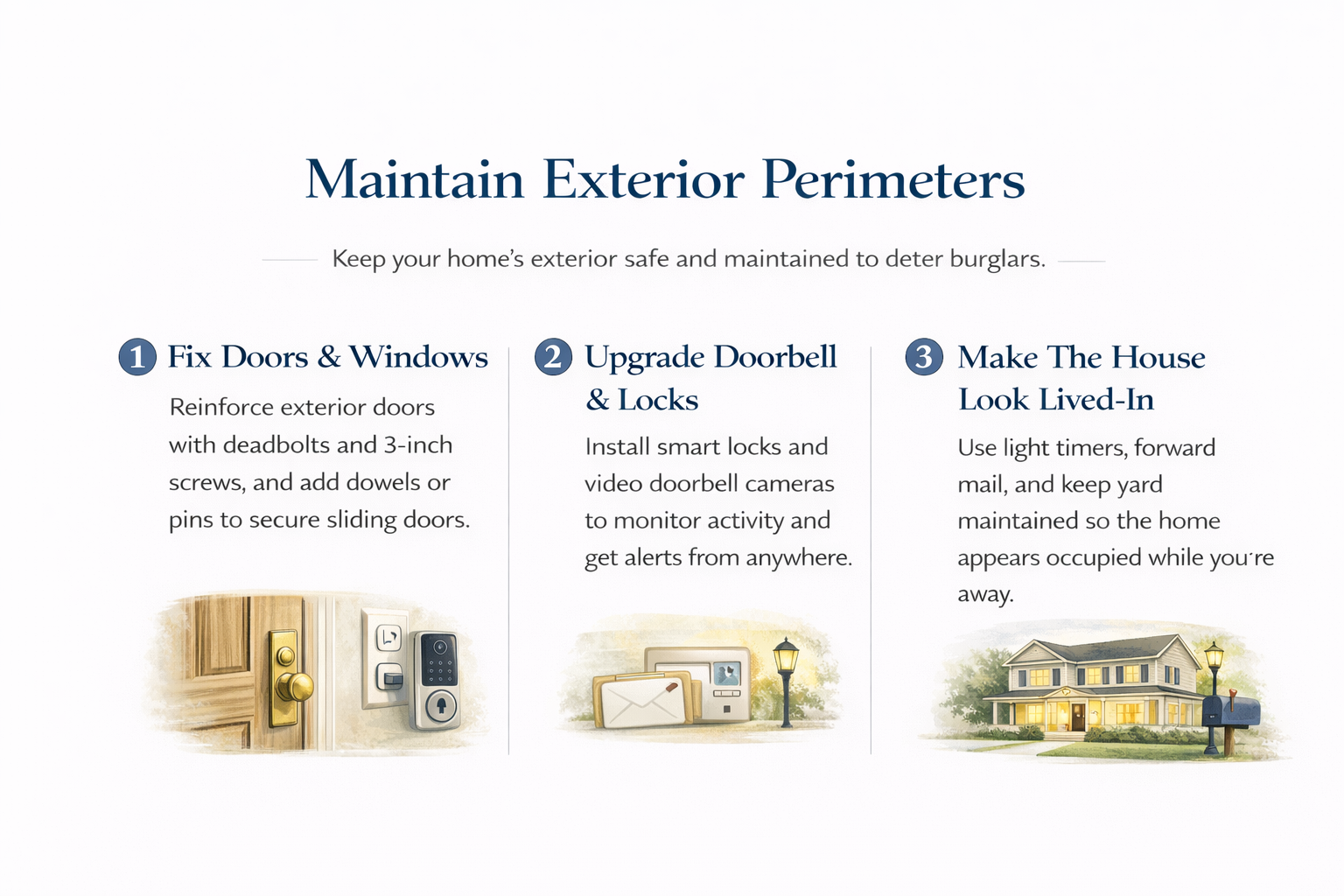
5. Fix Doors & Windows
Reinforce all exterior doors with deadbolts and strike plates secured with 3-inch screws that reach into wall studs. Standard short screws make doors easy to kick in, while longer screws create much stronger barriers. Lock all windows and add dowels or security pins to sliding doors for extra protection.
6. Upgrade Doorbell & Locks
Consider upgrading to smart locks and doorbell cameras like Ring or Nest that let you monitor your home remotely. These systems send instant alerts when someone approaches while letting you see and speak to visitors from anywhere. Additionally, cover ground-floor windows with curtains or shutters so burglars can’t see inside.
7. Make The House Look Lived-In
Create the appearance of daily activity so your home doesn’t look empty while you’re away. Simple, subtle cues can help deter unwanted attention. A lived-in look adds an extra layer of security without much effort. Here’s how to do it:
- Use light timers throughout the house on random patterns, not predictable schedules
- Leave some blinds partially open since completely dark houses look vacant
- Set a radio or TV on a timer to create noise, suggesting someone’s home
- Forward mail through USPS so envelopes don’t pile u,p advertising your absence
Have a Security Plan
Installing a complete security system with cameras, doorbell monitors, and professional monitoring helps contact the police if alarms trigger. And having a security plan or systems in place provides real-time oversight even when you’re thousands of miles away.
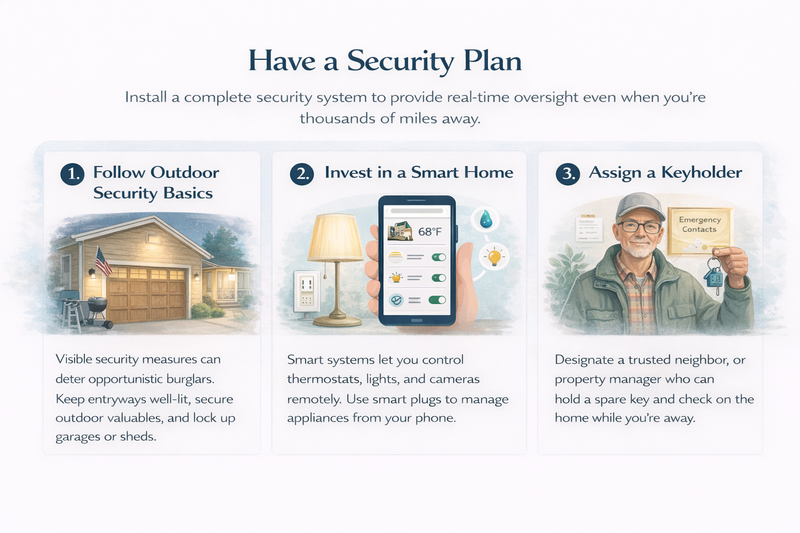
8. Follow Outdoor Security Basics
Having visible security measures deters most opportunistic burglars who prefer easier targets. The small investment in basic maintenance and lighting pays off by protecting your much larger investment. These security basics could be:
- Clear debris from gutters to prevent ice dams and roof leaks
- Secure ladders, tools, and equipment in your locked garage
- Remove or cover valuable items like grills, bikes, and patio furniture
- Install motion-sensor lights around entry points on dusk-to-dawn timers
9. Invest in a Smart Home
Smart home systems let you control thermostats, lights, and appliances remotely while checking live camera feeds anytime. Use smart plugs for lamps and appliances so you can control them from your phone and create varied lighting patterns. Many modern systems today also send alerts about temperature changes, water leaks, or unusual motion.
10. Assign a Keyholder
Designate a trusted neighbor or property manager as a keyholder who can respond quickly if problems arise. For extended absences, you can even consider hiring a property management company for regular inspections.
Pre-Departure Cleaning Checklist
Deep cleaning before you leave prevents pests, mold, and unpleasant odors from developing while you’re away. Nobody wants to return home after months in paradise only to face a disaster caused by neglect.
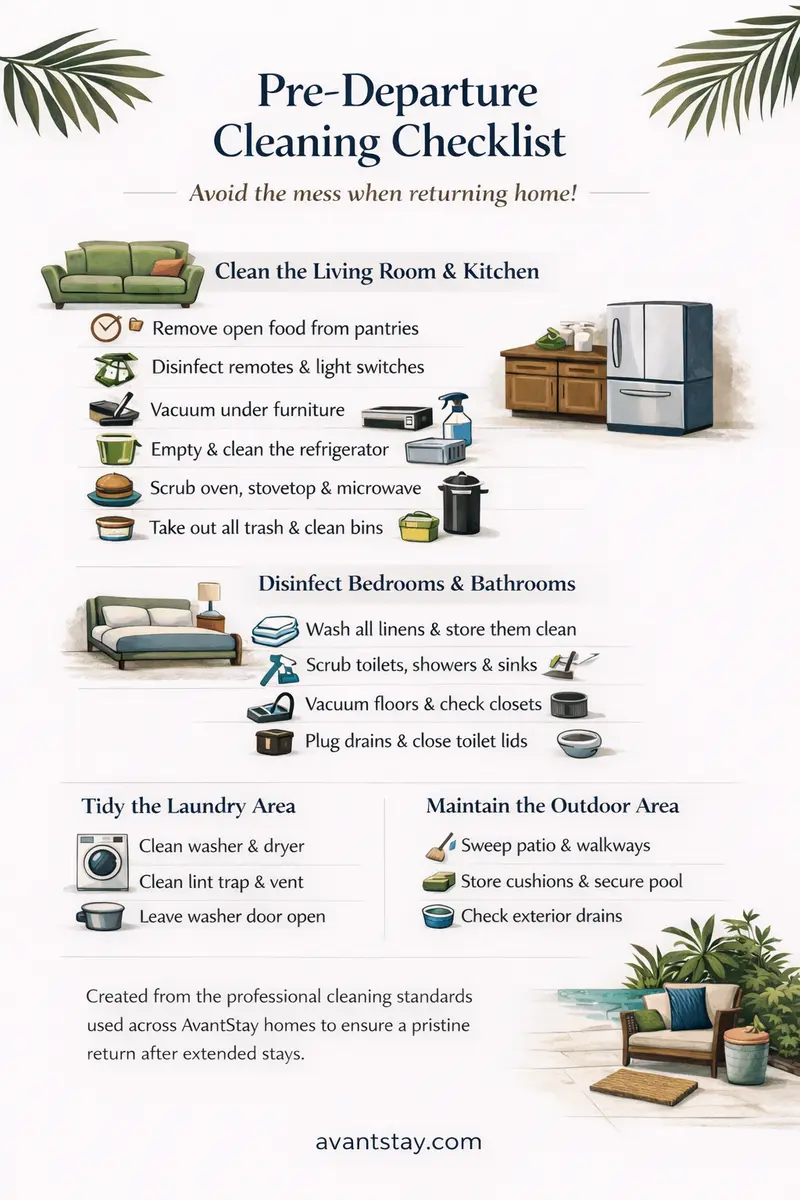
11. Clean the Living Room & Kitchen
- Remove all open food from pantries (snacks attract pests)
- Disinfect remotes, light switches, and frequently touched surfaces
- Dust thoroughly and vacuum under furniture where crumbs attract pests
- Empty the refrigerator completely; wipe down all interior surfaces
- Clean oven, stovetop, microwave, and dishwasher
- Run dishwasher empty with cleaner; leave door slightly open
- Take out all trash and recyclables; clean the bins themselves
- Wipe inside the trash disposal and deodorize the drains
- Leave baking soda or moisture absorbers in the fridge and cabinets
12. Disinfect Bedrooms & Bathrooms
- Strip and wash all bed linens before storing them clean
- Vacuum floors; check drawers and closets for forgotten food
- Scrub toilets, showers, sinks, and mirrors thoroughly
- Leave closet doors slightly open for air circulation
- Place moisture absorbers in closets or storage rooms
- Plug drains to prevent sewer odors
- Leave toilet lids closed after cleaning
13. Tidy the Laundry Area
- Clean the washing machine and dryer to prevent mildew smells
- Clean the lint trap and dryer vent
- Stock basic cleaning supplies for house sitters
- Leave the washer door open to prevent mold buildup
14. Maintain the Outdoor Area
- Mop all hard floors; sweep patios and porches
- Winterize pool/hot tub or arrange maintenance service
- Shake out doormats to remove food debris
- Store outdoor cushions to prevent mildew
- Check exterior drains for debris
For more information, we have a vacation rental cleaning checklist that provides professional-grade standards similar to what we use and follow when we clean AvantStay properties. By following this guide, your home stays pristine during your absence.
Mail & Utilities Management
Managing mail and services while away prevents pileups that advertise your absence while helping you avoid unnecessary expenses. Taking care of these tasks before leaving saves hassles and money.
How to Manage Mail and Packages While You’re Away
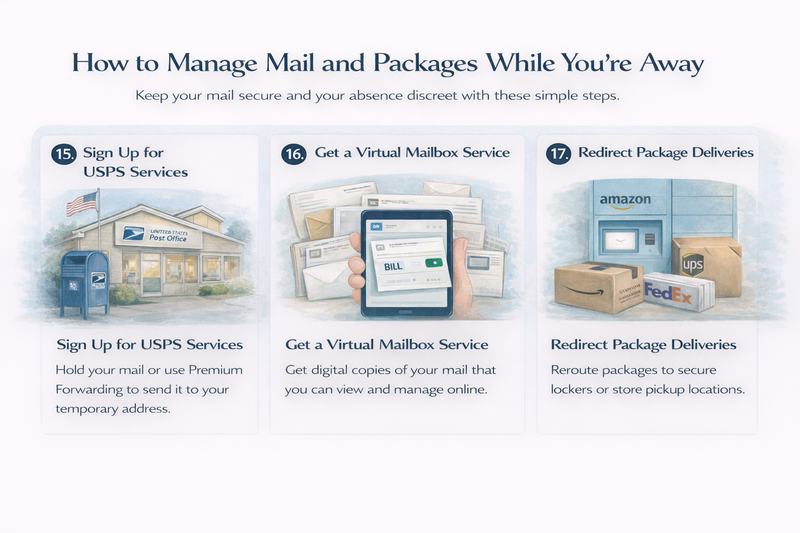
15. Sign Up for USPS Services
The simplest option comes through free mail hold for 3-30 days at your local post office. For longer trips, Premium Forwarding Service costs $23.50 per week and forwards mail to your temporary address for up to six months. Sign up for Informed Delivery to receive daily email previews of incoming mail.
16. Get a Virtual Mailbox Service
Services like Anytime Mailbox or Traveling Mailbox charge $15-50 monthly and provide mail scanning through phone apps. You can view, forward, or shred items remotely, handling important mail without physical forwarding. This eliminates junk before it piles up at your home.
17. Redirect Package Deliveries
Redirect package deliveries to prevent boxes from piling up while you’re away. Unattended packages signal an empty home and can attract theft. A few quick changes help keep your deliveries secure and your absence discreet. You can do this by:
- Redirecting your Amazon orders to Amazon Hub Lockers or store pickup
- Using free UPS/FedEx package hold services at their locations
- Asking trusted neighbors to collect packages that slip through
How to Manage Utilities While You’re Away
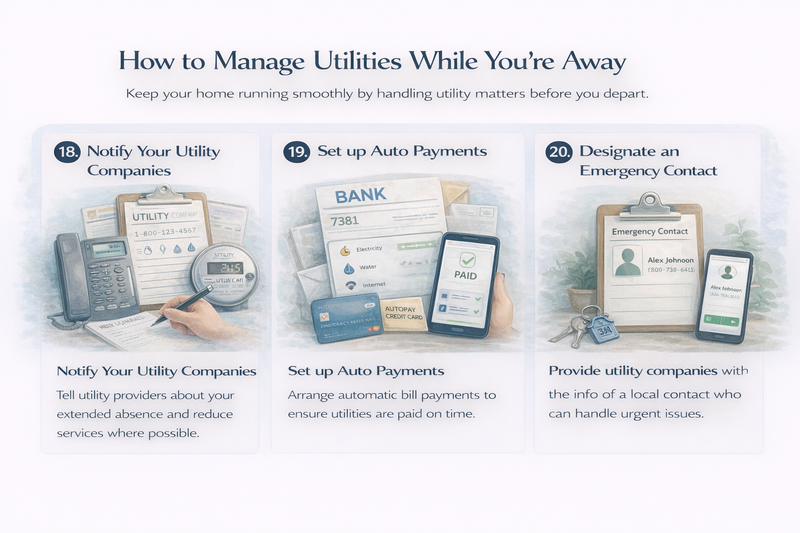
18. Notify Your Utility Companies
Contact all of your utility companies to notify them of your extended absence and explore options for reducing service. Many providers offer smart meter monitoring that alerts you to unusual usage patterns, suggesting leaks or problems. While you need electricity and gas for heating, you can also often pause cable, internet, and garbage collection.
19. Set up Auto Payments
Set up automatic bill payments for essential utilities so nothing gets shut off while you’re away. Keep one credit card dedicated to these autopay bills and monitor it regularly through your bank’s app.
20. Designate an Emergency Contact
Leave emergency contact information with utility companies and designate a local person who can handle urgent issues. Share their information with utility companies so problems can be addressed quickly and any emergencies can be managed without delay.
Finances & Legal Prep
Getting your financial and legal affairs in order helps prevent problems while you’re away. And preparing ahead ensures peace of mind and a smooth return home. These tasks are especially important for long-term absences.
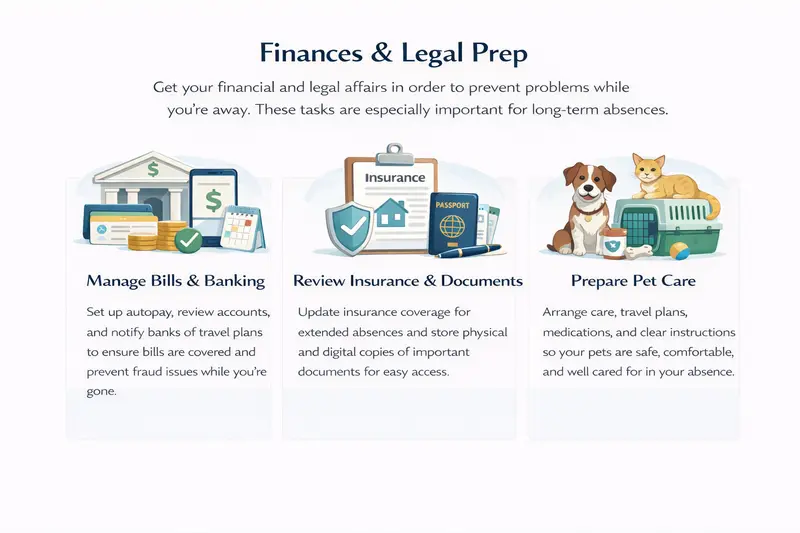
21. Manage Bills & Banking
Reviewing your accounts ahead of time ensures all bills are covered while you’re away. You should:
- Set up automatic payments for mortgage, utilities, insurance, and subscriptions to avoid late fees
- Review bank accounts to ensure autopay covers several months
- Notify your bank and credit cards about travel dates to prevent fraud alerts
- Set up alerts or reminders to monitor payments remotely
22. Review Insurance & Documents
Check your home insurance and add riders if needed, since standard coverage often doesn’t protect unoccupied homes. You can also:
- Add extended absence rider to homeowner’s policy (often required after 30 days)
- Carry insurance cards and policy documents in physical and digital formats
- Make digital copies of your passport, driver’s license, and health insurance cards
- Store copies in secure cloud storage for access anywhere
23. Prepare Pet Care
Whether your pets will travel with you or stay behind, plan ahead to ensure their safety and comfort. Preparing now avoids last-minute stress and ensures their needs are met. You can:
- Arrange boarding or pet-sitting if pets stay home
- Prepare travel documents, carriers, and medications if your pets will travel with you
- Leave detailed care instructions and emergency contacts for whoever is responsible for your pets
Vehicle & Travel Prep
Whether driving south or flying to a warm destination, preparing your vehicle and travel arrangements ensures a safe arrival. This gives you plenty of time before departure day.
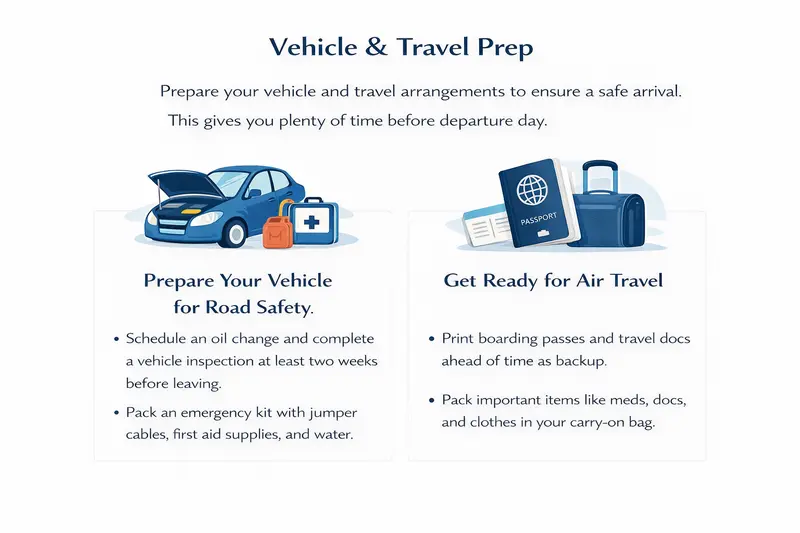
24. Prepare Your Vehicle for Road Safety
- Schedule an oil change and complete a vehicle inspection at least two weeks before leaving
- Have your mechanic check tires, brakes, fluids, and battery to catch any problems
- Pack an emergency kit including jumper cables, flares, first aid supplies, blankets, water, and snacks
- Download offline maps for your route in case you lose cell service during the drive
- Ensure your roadside assistance membership stays current throughout your trip
25. Get Ready for Air Travel
- Print boarding passes and travel documents ahead of time as backup in case digital versions fail
- Pack essential medications, important documents, and one change of clothes in your carry-on bag
- Arrive at the airport with extra time since winter weather can cause unexpected delays and longer security lines
- Program emergency contact numbers into your phone for quick access
- Book overnight stops in advance, especially if traveling with pets who need regular breaks
Packing Essentials for Warm Destinations
Light, versatile clothing works best for snowbird destinations where temperatures range from 50-75°F. Some warm destinations will still have cooler mornings and evenings, so layers matter more than heavy coats for these conditions.
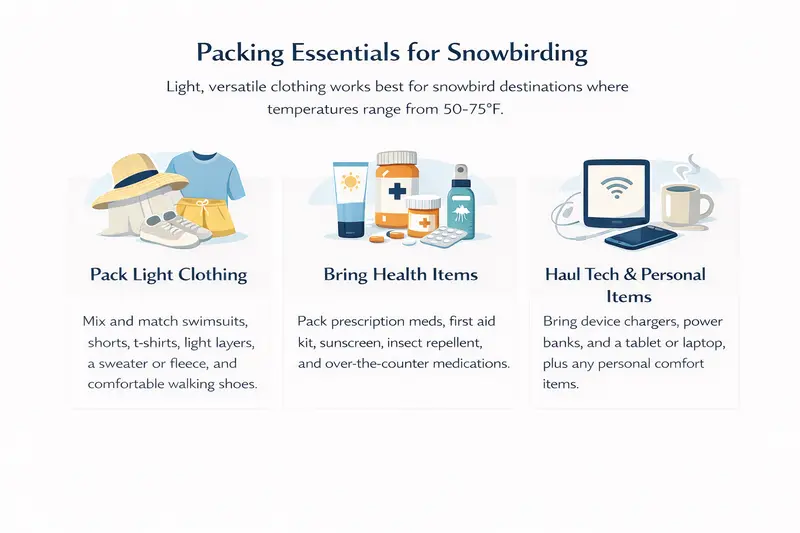
26. Pack Light Clothing
You can mix and match swimsuits, shorts, t-shirts, and light long-sleeved shirts. Include one light sweater or fleece for cooler days, a rain jacket for storms, and comfortable walking shoes, plus sandals.
27. Bring Health Items
Bring a three-month supply of prescription medications plus extra refills in case you can’t get home on schedule. Pack a first-aid kit, sunscreen, insect repellent, and over-the-counter medicines you regularly use. Remember sunglasses, reading glasses, and hearing aids, since replacing these items creates hassles.
27. Haul Tech & Personal Items
Don’t forget device chargers, power banks, and a laptop or tablet for staying connected. Download smart home apps to monitor your northern property remotely. You can also include personal comfort items like your favorite coffee mug, books, hobby supplies, and anything that makes you feel at home.
Final Walkthrough Before Departure
Your last day before leaving requires careful attention to final details. Walk through your home, room by room, checking that you’ve completed every task. With everything secured and checked, you can finally head south with confidence knowing your home is protected.
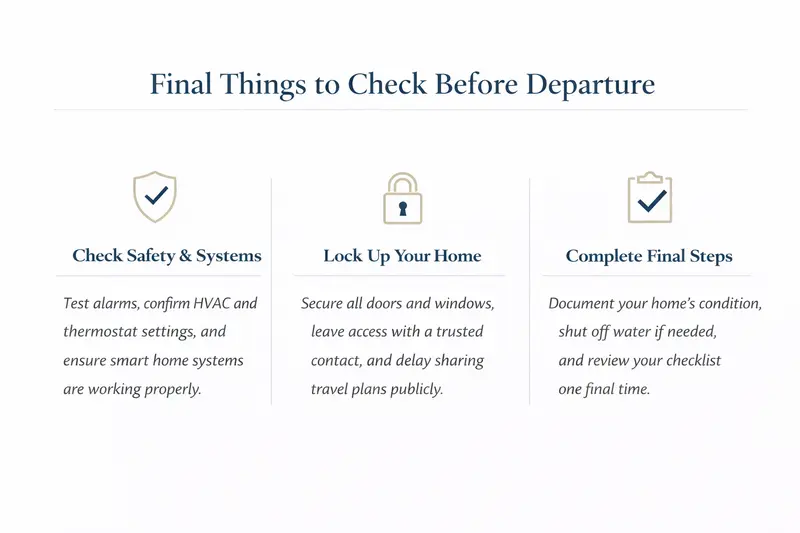
28. Check Safety & Systems
- Test smoke detectors and CO alarms one final time
- Confirm HVAC filters were changed recently
- Set all light and TV timers; verify they’re working properly
- Double-check the thermostat if it’s set to 55°F minimum
- Confirm smart home controls work through your phone
29. Lock Up Your Home
- Lock all doors and windows, then check each one twice
- Leave keys and garage openers with your trusted contact
- Provide detailed emergency instructions and contact information
- Avoid social media posts about your trip until you return
30. Complete Final Steps
- Take photos or video of your home’s condition for insurance documentation if problems arise
- Turn off main water valves if you’ll be gone several months, or at a minimum, know where shutoffs are located
- Review your checklist one last time to ensure nothing was forgotten
What is Snowbirding?
Snowbirding describes the lifestyle of traveling to warmer climates during winter months, typically from October through March or April. Most snowbirds are retirees between the ages of 50-70 who own or rent seasonal homes in southern states.

Why People Snowbird?
The tradition started decades ago when retirees discovered they could escape harsh northern winters with dangerous ice and heavy snow. Beyond avoiding cold weather, snowbirds enjoy active lifestyles with golf, beach activities, and outdoor recreation, which are impossible in frozen northern climates. Many eventually become permanent residents in their southern destinations after years of seasonal migration.
What are the Popular Snowbirding Destinations?
Florida, Arizona, Texas, California, and South Carolina are the top choices for winter travelers. These regions offer mild temperatures that make outdoor activities like golf and hiking comfortable all year long.
Frequently Asked Questions About Snowbirding
How long do snowbirds typically stay away?
Most stay 3-4 months, aligning with peak cold (Dec-Mar). Shorter 4-8 week trips suit families with school schedules or part-time remote work.
Is it safe to leave my home empty for months?
Yes, your home stays safe if you use smart locks, cameras, and timers to create a lived-in look. Many travelers successfully leave for months by having a trusted neighbor or property manager to perform regular property checks.
What temperature should I leave my house at in winter?
Maintain your thermostat at a minimum of 55°F to prevent your plumbing from freezing and bursting. This setting gives the warmth needed to protect the pipes inside your walls.
Should I tell anyone I’ll be gone?
Notify a few trusted contacts and provide them with emergency info, but keep the news off social media. Selective notification ensures you’re not alerting the general public.
Do I need to buy a second home, or can I rent?
Rent first to test destinations, plus it’s flexible and has lower risk. Monthly rates also drop 20-40% off-season. At AvantStay, we offer snowbird rentals that you can stay in for months.
Start Your Snowbird Season with AvantStay
Proper preparation makes the difference between a worry-free winter and constant stress about problems back home. Following this comprehensive checklist ensures your property stays protected while you enjoy sunshine and warmth. Plus, the time invested in preparation pays off through months of peace of mind.

Find Your Perfect Snowbirding Home with AvantStay
Your snowbird experience deserves accommodations that feel like home while providing resort-quality amenities. If you prefer beachfront condos, desert retreats, or golf course properties, AvantStay has the right snowbirding homes that transform your winter escape from ordinary to extraordinary.
👉 Explore AvantStay Vacation Homes
Let AvantStay Manage Your Home
If you’re heading south for the winter, let AvantStay professionally manage your property while you are away. We are your trusted property management company, handling everything from guest bookings to turning your empty home into a high-performing vacation rental that earns you passive income.