You bought your vacation rental to generate income, but are you taking full advantage of the tax strategies available to you? Cost segregation benefits have always been powerful for property owners, but they just became even more attractive with the permanent reinstatement of 100% bonus depreciation. Instead of depreciating your entire property over 27.5 years, you can separate out components like furniture, flooring, and outdoor amenities and write them off much faster. For owners who meet material participation requirements, these accelerated deductions can offset income from any source, turning your vacation rental into a serious tax planning tool.
TLDR:
- Cost segregation studies let you reclassify 20-40% of property components for immediate tax deductions instead of waiting 27.5 years.
- 100% bonus depreciation is now permanent for properties acquired after January 19, 2025, creating immediate first-year write-offs.
- Short-term rentals with average stays under 7 days bypass passive loss limits, letting you offset W-2 and business income.
- Properties valued above $300,000 typically see 5-10x ROI on study costs, generating $45,000+ in year-one cash savings.
- AvantStay’s revenue management algorithm and Marriott Bonvoy partnership drive the high occupancy rates that maximize your depreciation benefits.
What Is a Cost Segregation Study for Vacation Rental Properties
Most vacation rental owners depreciate their entire property over 27.5 years. But here’s what your CPA may not have told you: 20-40% of your property’s components can be written off in 5-15 years instead. That’s the power of cost segregation—and for short-term rentals generating active income, it’s even more valuable than traditional long-term rentals.
A cost segregation study is an engineering-based analysis that identifies which property components qualify for accelerated depreciation. Instead of waiting nearly three decades to claim deductions on furniture, flooring, and outdoor amenities, you can write them off immediately.
For vacation rental owners, this strategy is particularly valuable because short-term rentals generate active income with unique tax treatment. The higher your nightly rates and occupancy, the more you benefit from front-loading depreciation deductions to offset that rental income.
The study produces a detailed report that reclassifies building components based on IRS guidelines. This documentation supports your tax return and withstands IRS scrutiny because it follows established engineering and tax methodologies.
100% Bonus Depreciation Returns in 2026
Congress permanently reinstated 100% bonus depreciation for qualifying property acquired after January 19, 2025, creating a significant opportunity for vacation rental owners. This reverses the phasedown schedule that would have reduced bonus depreciation to just 20% in 2026.
For property owners, this means you can immediately deduct 100% of the cost of qualifying assets identified through a cost segregation study in the first year. Instead of waiting decades to claim depreciation on furniture, appliances, and land improvements, you can write off these components entirely when you file your taxes.
The permanence of this change matters. You’re no longer racing against an expiration date or trying to time purchases around temporary incentives. Whether you acquired your vacation rental in early 2025 or you’re planning future acquisitions, the full deduction remains available.
This legislative shift amplifies the value of cost segregation studies. The combination of accelerated depreciation schedules and 100% bonus depreciation means qualifying components generate immediate tax benefits rather than being spread across years or decades. For high-performing vacation rentals generating substantial income, these first-year deductions can create significant cash flow advantages.

The Short-Term Rental Tax Advantage
The IRS draws a critical distinction for vacation rental properties based on average guest stay length. When your property maintains an average stay of 7 days or fewer, it’s not classified as a passive rental activity under tax law. Instead, it’s treated as a trade or business.
This classification fundamentally changes how you can use losses generated by accelerated depreciation. Traditional long-term rentals face passive activity loss limitations that prevent you from deducting rental losses against your W-2 income, business income, or investment income. You’d need real estate professional status to unlock those deductions, which requires 750 hours of material participation annually and more time in real estate than any other activity.
Short-term rentals sidestep these restrictions entirely. If you meet material participation requirements (which we’ll cover in the next section), your vacation rental losses can offset ordinary income from any source. This means the substantial first-year deductions from a cost segregation study combined with 100% bonus depreciation can reduce your overall tax liability across all income streams.
For high-earning property owners, this transforms vacation rentals from passive investments into strategic tax planning tools that actively reduce your tax burden.
Material Participation Requirements for Vacation Rental Owners
The IRS provides seven material participation tests to determine if your vacation rental qualifies for non-passive treatment. You only need to satisfy one of these tests to qualify, and for most vacation rental owners, three tests stand out as the most practical.
500-Hour Test
The 500-hour test is straightforward: spend at least 500 hours during the tax year participating in your rental activity. This includes guest communications, coordinating turnover cleanings, managing pricing and listings, overseeing maintenance, and handling booking inquiries. For owners managing 2-3 properties with high turnover, this threshold is entirely achievable.
100-Hour Test
The 100-hour test requires that you participate at least 100 hours and that no other individual (including contractors) spends more time on the activity than you do. This works well if you handle most operations yourself rather than delegating everything to a property manager. Your hours count, but if you hire a full-time property manager logging more hours than you, this test won’t work.
Substantially All
The substantially all test requires you to perform substantially all of the participation in the activity. If you’re a solo operator handling everything from guest messaging to coordinating cleaners, this test may apply. However, once you bring in contractors or property managers doing significant work, this becomes harder to satisfy.
Document your hours carefully. Track time spent on phone calls with guests, hours managing your listing, time coordinating with cleaners and maintenance vendors, and effort spent on pricing optimization. Keep a contemporaneous log rather than reconstructing hours later. This documentation protects you if the IRS questions your material participation status.
Cash Flow Benefits of Accelerated Depreciation
A cost segregation study typically reclassifies 20% to 40% of property components into accelerated depreciation categories. For a $1 million vacation rental, that means $200,000 to $400,000 in assets can generate immediate tax deductions rather than being depreciated over 27.5 years.
When you combine this reclassification with 100% bonus depreciation, the cash flow impact is immediate. Instead of claiming roughly $36,000 in standard depreciation annually on that $1 million property, you could generate $200,000 to $400,000 in first-year deductions from reclassified components alone. For an owner in the 37% tax bracket, that translates to $74,000 to $148,000 in tax savings in year one.
This isn’t about creating new deductions. You’re simply accelerating when you claim them. The difference is that front-loaded deductions give you cash now when you need it most: right after acquisition when you’re managing closing costs, potential renovations, and initial operating expenses.
You can redirect these tax savings into property improvements that boost nightly rates, acquire additional properties while capital is available, or pay down acquisition debt faster to improve your overall returns.
Components That Qualify for Accelerated Depreciation
Furniture and Appliances
Every piece of furniture qualifies for 5-year depreciation: beds, sofas, dining tables, outdoor furniture, and office equipment. Kitchen appliances including refrigerators, ranges, dishwashers, and microwaves fall into the same category. This represents substantial value in fully furnished vacation rentals.
Flooring and Specialty Finishes
Carpeting, vinyl, and decorative wall treatments can be separated from the building structure. Upgraded tile work, accent walls, and custom millwork designed to enhance guest experience often qualify as personal property rather than structural improvements.
Lighting and Electrical Fixtures
Decorative chandeliers, sconces, portable lamps, and specialty lighting installations can be reclassified. Track lighting and designer fixtures that aren’t permanently integrated into the building structure typically qualify for shorter depreciation schedules.
Outdoor Amenities and Landscaping
Site improvements including driveways, walkways, fencing, and retaining walls qualify for 15-year depreciation. Pools, hot tubs, outdoor kitchens, fire pits, and irrigation systems can be separated from the building. Landscaping itself qualifies for accelerated treatment.
Vacation rentals built for guest experience carry significantly more qualifying components than unfurnished long-term rentals, making cost segregation studies particularly valuable for short-term rental portfolios.
Cash Impact of Cost Segregation
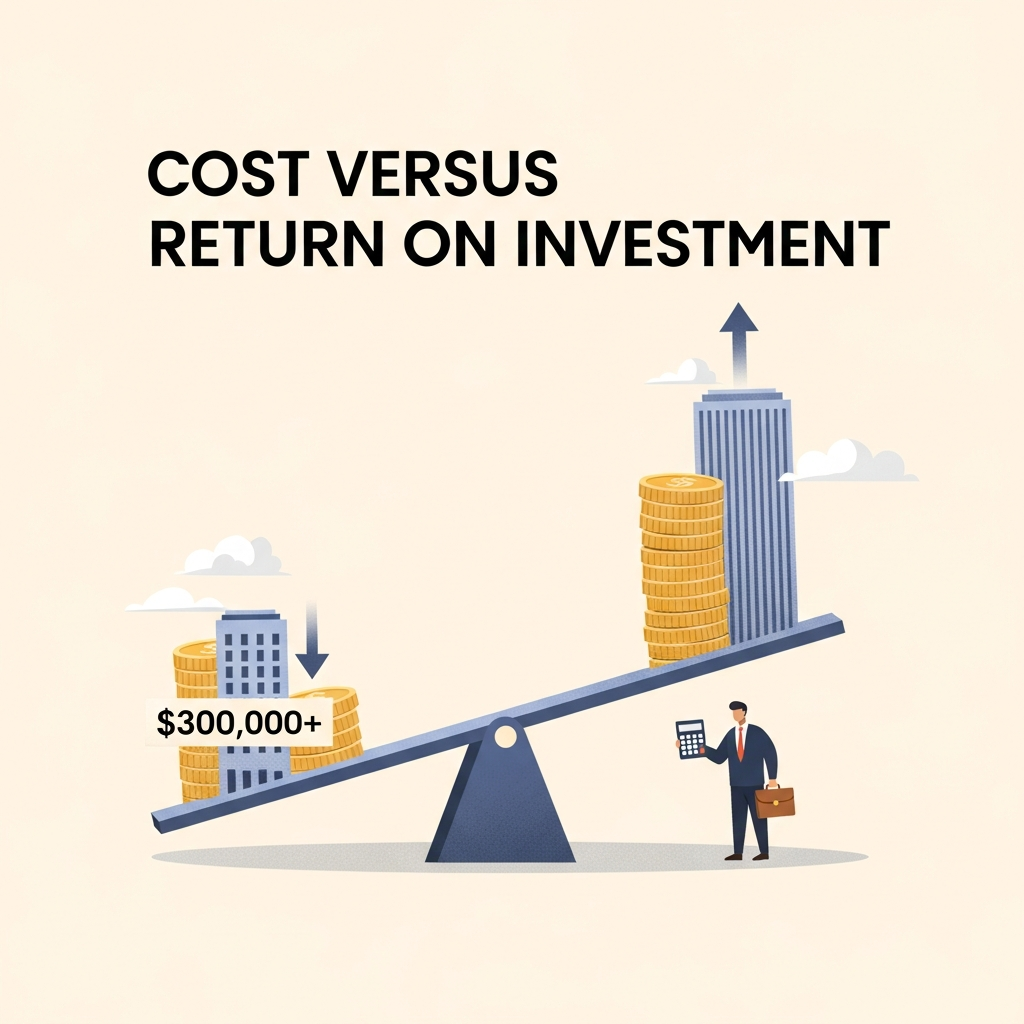
Most real estate tax professionals recommend cost segregation studies for properties valued at $300,000 or above. The math is straightforward: studies typically cost between $3,000 and $10,000 depending on property complexity, while the first-year tax savings often deliver returns of 5x to 10x that investment.
The decision becomes less about whether to pursue cost segregation and more about whether your property meets the minimum value threshold. Below $300,000, the study cost may consume too much of the tax benefit. Above that threshold, you’re leaving substantial cash on the table by not pursuing this strategy.
To understand the real cash impact of cost segregation, consider this breakdown of a typical $824,000 vacation rental. Instead of claiming just $22,181 in annual building depreciation, you can generate $215,000 in first-year deductions from qualifying components—creating immediate tax savings of $75,250 at a 35% tax rate:
How AvantStay Optimizes Property Performance for Owners
When you’re pursuing cost segregation strategies to maximize vacation rental returns, property performance matters just as much as tax optimization. We’ve built our entire operating model around delivering both.
Our proprietary revenue management algorithm analyzes thousands of data points including local events, seasonal demand, and flight patterns to optimize pricing dynamically. This consistently drives occupancy and rates above local market averages, generating the rental income that makes accelerated depreciation strategies worthwhile.
The Lighthouse owner portal gives you complete transparency into your property’s financial performance. You can access real-time revenue data, occupancy metrics, and operational expenses from anywhere. This documentation becomes valuable when you’re tracking material participation hours or demonstrating active trade or business status to your tax advisor.
Our exclusive partnership with Marriott Bonvoy provides access to 140+ million qualified travelers who can earn and redeem points at your property. This distribution advantage drives higher-caliber guests at premium rates without the inconsistency of unmanaged listings.
For high-net-worth investors pursuing sophisticated tax strategies, we deliver the hands-off institutional-grade management experience you expect while maintaining the documentation and operational rigor your cost segregation benefits depend on.
Final Thoughts on Cost Segregation for Short-Term Rentals
The benefits of cost segregation become especially powerful when applied to vacation rentals that qualify as active trades or businesses. You can redirect first-year tax savings into property upgrades that drive higher nightly rates or use the cash flow to acquire additional properties. With permanent 100% bonus depreciation now locked in, this strategy remains available whether you’re buying today or planning future acquisitions.
FAQ
How much does a cost segregation study typically cost for vacation rental properties?
Studies generally range from $3,000 to $10,000 depending on your property’s complexity, but the first-year tax savings often deliver returns of 5x to 10x that investment, making them worthwhile for properties valued at $300,000 or above.
Can I still benefit from a cost segregation study if I purchased my vacation rental several years ago?
Yes, properties purchased within the last 15 years qualify for look-back studies using IRS Form 3115, which allows you to claim all missed accelerated depreciation as a single catch-up adjustment in your current tax year without amending previous returns.
What’s the minimum number of hours I need to qualify for material participation in my vacation rental?
You need to meet just one of seven IRS tests, with the most practical being 500 hours annually in your rental activity, or 100 hours if no other individual spends more time on the activity than you do.
Does 100% bonus depreciation apply to properties I acquired before 2025?
The permanent 100% bonus depreciation only applies to qualifying property acquired after January 19, 2025, but you can still benefit from accelerated depreciation schedules on earlier acquisitions through a cost segregation study.
How do I prove my vacation rental qualifies as a trade or business rather than passive rental activity?
Your property must maintain an average guest stay of 7 days or fewer, and you must meet one of the IRS material participation tests while keeping contemporaneous documentation of all hours spent on guest communications, pricing management, maintenance coordination, and operational tasks.