
Nothing kills the vacation vibe faster than realizing your idea of affordable and your friend’s version are $500 apart. When you’re figuring out plan a group trip, the goal isn’t getting everyone to spend the same amount. It’s building a trip where the friend watching their wallet and the one ready to splurge both have an amazing time without awkwardness.
TLDR:
- Start with an anonymous budget poll before booking to identify spending ranges
- Rental properties cut lodging costs 45% vs hotels and split evenly across all guests
- Create tiered activities so budget-conscious travelers skip spa days without missing core experiences
- Expense tracking apps like Splitwise prevent awkward money conversations throughout your trip
- AvantStay’s per-property pricing and full kitchens help mixed-budget groups save $100+ per person
Have the Budget Conversation Before You Book
The worst time to find out your friend can only afford ramen while you’re planning steakhouse reservations? Halfway through trip planning. Start with an honest conversation about what everyone can realistically spend before you book anything.
Create a safe space for this discussion by sharing your own budget range first. Frame it casually: “I’m thinking I can swing around $800 total for this trip” or “I’d like to keep my share under $500 if possible.” When someone else speaks up, the pressure drops.
Send out a quick poll asking everyone to anonymously share their comfortable spending range. You’ll quickly see whether you’re planning a luxury weekend or a budget-friendly escape. Once you know the spread, you can make smarter decisions about destination, accommodation style, and activity mix.
Create Different Budget Tiers for Activities
Not everyone needs to do everything together. Break your itinerary into three tiers: must-do group experiences, mid-range options, and splurge activities.
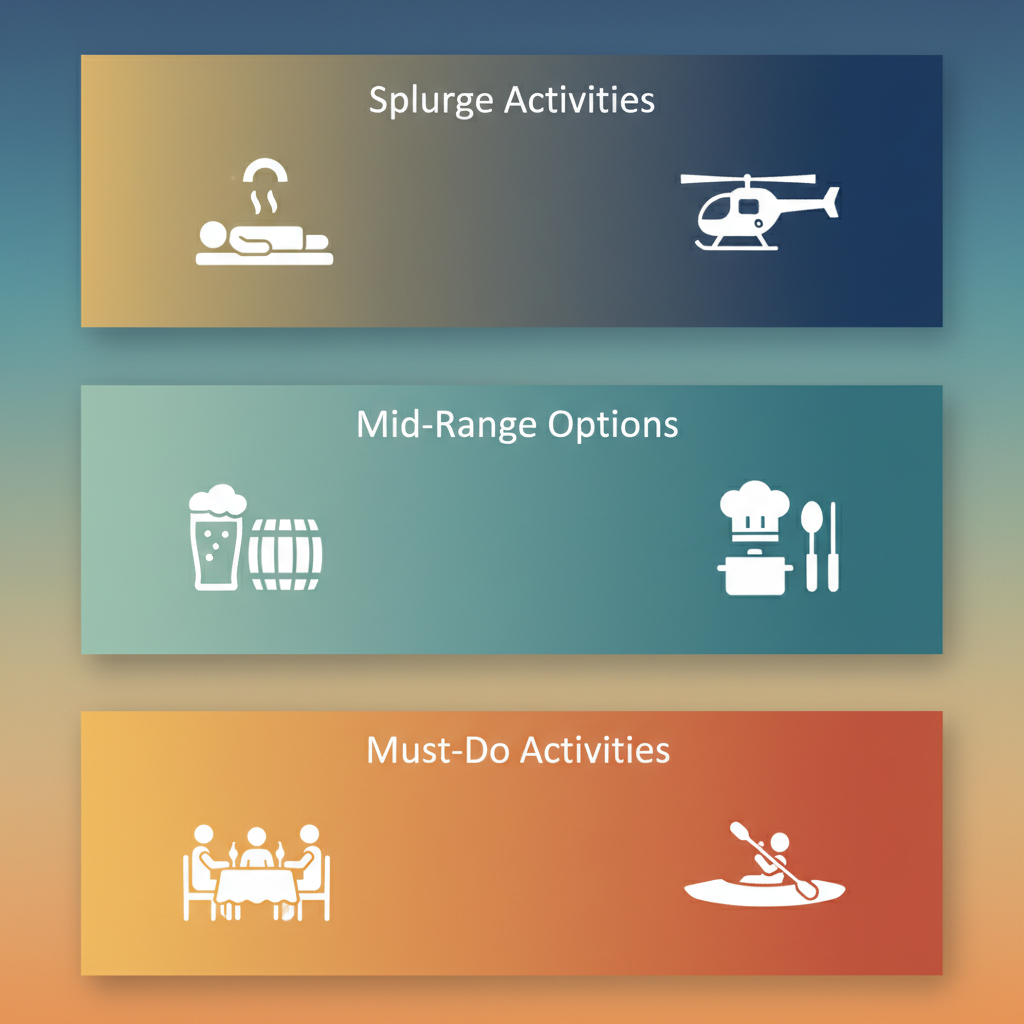
The must-do tier covers core experiences everyone agrees on upfront. Maybe that’s one nice dinner out or a group kayaking trip. These are non-negotiable and factored into everyone’s base budget.
Mid-range activities are optional but accessible to most. Think brewery tours, mini golf, or cooking a special meal together. People can opt in if interested.
Splurge activities cater to those with extra room in their budget. Spa days, helicopter tours, or premium wine tastings fall here. No pressure, no judgment for those who sit these out.
This tiered approach prevents anyone from feeling left out or pressured, similar to how clear vacation rental house rules set expectations upfront. The group stays together for core moments while you can choose your own adventure for everything else.
Use Expense Tracking Apps to Maintain Transparency
Money tracking gets messy when eight people are buying groceries, gas, and attraction tickets throughout a trip. Apps like Splitwise, Settle Up, and Tricount solve this by logging shared expenses as they happen.
Someone grabs coffee for the group? They snap a photo of the receipt and mark who benefited. The app calculates individual shares instantly and maintains a running tally of who owes whom. At trip’s end, the app settles everything with minimal transactions between people instead of a web of individual payments.
These apps create a shared record everyone can view anytime, eliminating the “wait, did I already pay you back?” confusion. When spending is visible to the whole group, no one worries about fairness or feels awkward bringing up money. Set up your group’s app before departure and agree on one person to manage it, or let everyone input their own purchases.
Cook Some Meals Together, Eat Out for Others
Restaurants add up faster than most groups expect. Eight people spending $100 each per day on dining hit $3,200 over a four-day trip. Cut that in half by cooking some meals at your rental, and your total food cost drops to around $320 for groceries plus selective restaurant outings.
The hybrid approach works because nobody wants to cook every meal on vacation, but nobody needs to eat out for every single breakfast and lunch either. Plan one or two special dinners at restaurants the group agrees on, then handle breakfasts and a few casual meals in-house. Pancakes, taco nights, and sandwich spreads are easy to pull off together and cost a fraction of restaurant tabs.
Rental properties with full kitchens make this possible in ways hotels can’t match. Kitchen access becomes the equalizer for mixed budgets. The traveler stretching their funds can participate in group dinners out because they saved $40 skipping restaurant breakfast.
Assign meal prep to pairs or small teams so no one person carries the cooking load, making vacation rental stays accessible during slower travel periods too. Grocery runs become group activities, and shared meals often turn into the trip’s most memorable moments anyway.
Split Up for Experiences When Budgets Diverge
Choosing separate activities based on budget keeps everyone happy without financial pressure. When half the group wants a $200 wine tour and the other half prefers a free beach day, splitting up for a few hours works better than forcing compromise.
Frame these splits as equally valid choices, whether half your group prefers visiting St. Augustine while others relax at the beach. “Who’s interested in the helicopter tour tomorrow morning? The rest of us are hitting the farmers market.” Set clear regroup times so separation feels temporary: “Spa group meets back at 4pm, hiking crew by 3:30, then we’re all together for sunset drinks.”
Share stories when you reunite. The helicopter group shows aerial shots while the market crew unpacks local cheese and fresh bread, enriching the whole trip.
Negotiate Group Discounts Where Possible
Groups of six or more can often secure discounts tour companies and activity vendors don’t advertise publicly. Call ahead for excursions, boat rentals, or guided experiences and ask directly about group pricing. Many operators drop rates 10-20% for parties above certain thresholds.
Transportation offers the biggest savings potential. Shuttle services, van rentals, and private drivers typically offer group packages that beat individual ride-share costs. Eight people splitting a $400 private wine tour bus pay $50 each versus $80 per person at the standard rate.
Contact vendors at least two weeks before your trip. Mention your group size upfront and request their best available rate. Tour companies want to fill capacity and will work with you when dates are flexible.
Accommodations sometimes offer perks for larger groups or extended stays. Ask about complimentary early check-in, late checkout, or waived cleaning fees when booking direct.
Consider Splitting Costs by Room Quality Instead of Equally
Equal splits assume all rooms offer equal value, but that’s rarely true. The primary suite with a king bed and private balcony differs wildly from the bunk room down the hall. Fair doesn’t always mean identical.
Before booking, assign percentage values to each bedroom based on bed size, bathroom access, views, and location within the property. The primary suite might represent 25% of the nightly rate, while smaller rooms take 15% each. When you rent a $2,000 property, the primary suite occupant pays $500 while standard room guests pay $300.
Discuss preferences before booking and let people choose their room tier. Those who want more comfort pay more, while budget-focused travelers take smaller spaces and save money. Everyone gets what they value most without resentment.
Settle Up Promptly After the Trip
The awkwardness of chasing down $47 three weeks after vacation? Completely avoidable. Close out finances within three to five days of returning home while memories are fresh and everyone still feels connected to the trip.
Pull up your expense tracking app the day after you get back. Review the final tally, confirm all shared costs are logged, and send the settlement summary to the group chat. Choose payment methods everyone already uses like Venmo, Zelle, PayPal, or Cash App for instant transfers.
If someone hasn’t paid after four days, follow up directly but gently. Most delays stem from oversight, not avoidance. When disputes arise over specific charges, refer back to receipts and original agreements instead of letting small amounts damage friendships.
Choose Group Accommodation to Split Fixed Costs

Lodging takes the biggest share of any group trip budget, making it the smartest place to find common ground across different spending levels. When you rent a whole property instead of booking separate hotel rooms, everyone splits the same base cost no matter what they spend on activities later.
The numbers tell the story. Eight people needing four hotel rooms at $350 per night spend $1,400 total, or $175 each minimum. A vacation rental at $2,500 drops to $312 per person for the whole place. You get extra space, shared living areas, and a full kitchen that helps cut meal costs.
Expense Category | Hotel Rooms (4 rooms) | Vacation Rental | Savings Per Person |
|---|---|---|---|
Lodging (per night) | $1,400 total ($175 per person) | $2,500 total ($312 per person) | – |
Lodging (4 nights) | $5,600 total ($700 per person) | $2,500 total ($312 per person) | $388 |
Meals (4 days, eating out) | $800 per person | $400 per person (hybrid approach) | $400 |
Shared spaces | Lobby only | Living room, kitchen, outdoor areas | – |
Total Trip Cost | $1,500 per person | $712 per person | $788 |
This structure balances mixed budgets because accommodation becomes a fixed, equal expense. The friend watching their wallet pays the same nightly rate as the one ready to spend freely on excursions. No one covers someone else’s room upgrade, and no one feels uncomfortable about what they can afford.
Vacation rentals use per-property pricing instead of per-person rates, which removes a major tension point. With Millennials favoring wellness in travel and more than half actively planning wellness-focused trips in 2026, having a full kitchen supports health-conscious eating while keeping costs manageable for the group.
After splitting the house cost evenly, everyone knows exactly what budget remains for meals, outings, and personal extras.
How AvantStay Makes Group Travel More Accessible Across Budgets
When you’re coordinating a group with different budgets, AvantStay properties make the math work in your favor. Our per-property pricing means you split one nightly rate across the entire group instead of multiplying hotel room costs by each traveler.
Every property includes full kitchens that help control food spending, multiple bedroom configurations so travelers can choose rooms matching their comfort level, and shared living spaces where everyone gathers without extra charges. Through the Butler app, group members can reserve individual bedrooms within your shared booking and split payments according to whatever arrangement works for your crew.
Our concierge services scale to different activity budgets too. Request a private chef for one special dinner or stock the fridge for DIY meals. Book spa services for whoever wants them or stick to included amenities like pools, game rooms, and fire pits, perfect for destinations like Isle of Palms.
Final Thoughts on Group Travel Across Budget Levels
The key to successful group trips with different budgets lives in upfront honesty and built-in flexibility. When you plan group trips that split fixed costs evenly but allow personal choice on extras, everyone wins without awkward money conversations mid-vacation. Your next group getaway can bring people together regardless of what they can spend, as long as you design the trip with options from the beginning.
Share your own budget range first to set the tone—something casual like “I’m thinking around $800 total works for me”—then send an anonymous poll so everyone can share their comfortable spending range without pressure.
Assign percentage values to each bedroom based on size, bathroom access, and amenities before booking—the primary suite might represent 25% of the nightly rate while smaller rooms take 15% each, so everyone pays based on what they’re getting.
Use expense tracking apps like Splitwise or Settle Up to log purchases as they happen, then let the app calculate who owes what and settle everything with minimal transactions at the end of your trip.
When you have six or more people, since eight travelers needing four hotel rooms at $350 each spend $175 per person minimum, while splitting a $2,500 vacation rental drops to $312 per person with bonus kitchen access to cut meal costs.
Close out all finances within three to five days of returning home while the trip is still fresh in everyone’s mind, using payment apps like Venmo or Zelle for instant transfers to prevent awkward follow-ups weeks later.