
The pool’s green, the AC doesn’t work, and the listing photos were apparently taken with a fisheye lens because these rooms are half the size you expected. You’ve got specific rights and refund options when a vacation rental doesn’t match its listing, but most people wait too long or skip the documentation that actually gets results. Whether you’re pushing for a full refund, a partial credit, or a relocation to a better property, your next moves in the first few hours determine whether you’ll spend this vacation fighting with a host or actually relaxing somewhere decent.
TLDR:
- Document issues with photos and videos immediately upon arrival, then contact the host in writing within 1 hour to maximize resolution options
- Report problems within 24-72 hours through your booking site to qualify for refunds under policies like Airbnb’s AirCover
- File credit card disputes only after exhausting booking site remedies, within 60 days of the charge appearing on your statement
- AvantStay manages every property directly with 100-point cleaning inspections and 24/7 Butler app support to prevent listing discrepancies
Immediate Steps to Take When Your Vacation Rental Isn’t as Advertised
The moment you step into a rental that doesn’t match the listing, take action right away. Use your phone to photograph or video every discrepancy: the broken air conditioner, the construction next door, the pool that’s green instead of sparkling, the bedroom count that’s wrong. Time-stamp everything and capture wide shots plus close-ups.
Before you unpack, screenshot the original listing from the booking site while you still have cell service, including any vacation rental house rules specified in the listing. Save photos, descriptions, amenity lists, and any host promises. You’ll need this evidence if the host later edits the listing.
Contact the host or property manager immediately through the booking app or email. Text your complaint in writing so there’s a record. Be specific: “The listing shows three bathrooms, but there are only two” works better than “This place is disappointing.” Set a reasonable deadline for resolution.
Understanding Your Legal Rights as a Vacation Rental Guest
When you book a vacation rental, you enter a binding contract where the listing description, photos, and amenities form the agreement terms. If the property doesn’t match what was advertised, the host has breached this contract, giving you grounds to request a remedy.
Consumer protection laws in most states prohibit deceptive trade practices, including false advertising in vacation rentals. If a host knowingly misrepresents a property, you may receive compensation beyond a refund.
Unlike hotels governed by innkeeper statutes, vacation rentals face fewer automatic protections, whether operated under a master lease agreement or direct ownership. Still, rental properties must meet basic habitability standards under landlord-tenant law. Severe issues like broken plumbing or safety hazards may violate these requirements, providing legal recourse even on short stays.
Your booking site’s terms of service create additional contractual obligations, often guaranteeing properties meet certain standards and outlining your rights when they don’t.
Common False Advertising Issues in Vacation Rentals
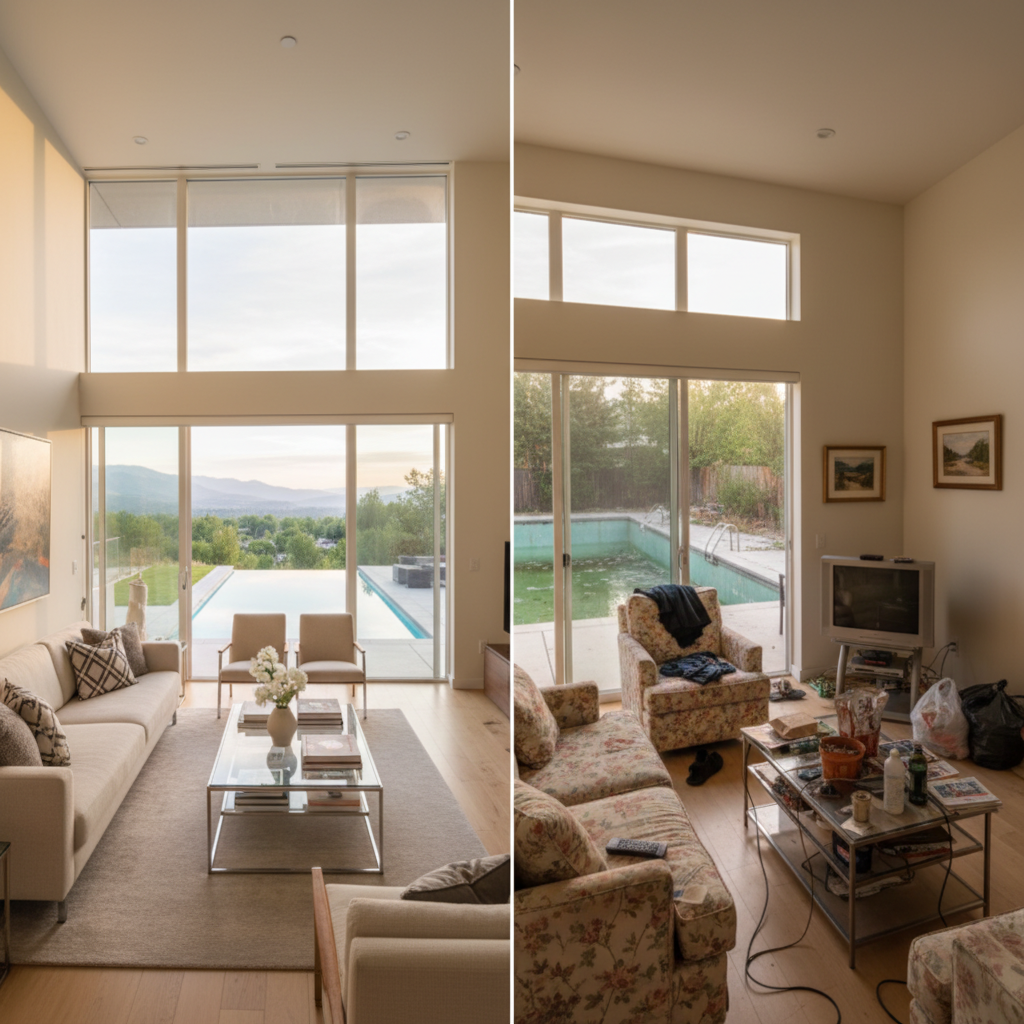
Some issues rise to the level of false advertising while others are subjective disappointments. Cleanliness problems rank among the most common complaints: arrive to dirty sheets, unwashed dishes, or hair in the bathroom and you have legitimate grounds for action.
Photos taken with wide-angle lenses can make rooms appear 30% larger than reality. When actual square footage differs substantially from what images suggested, that’s misrepresentation. The same goes for amenities: a listing promising a hot tub that’s broken or a pool that’s closed constitutes false advertising.
Undisclosed fees are another red flag. Cleaning charges, resort fees, or service charges that appear only at checkout violate truth-in-advertising principles. According to the FTC, rental scams and deceptive practices cost consumers $65 million in reported losses.
Inaccurate bedroom or bathroom counts, wrong occupancy limits, or locations far from advertised landmarks (like claiming a property is in St Augustine when it’s 30 miles away) all qualify as material misrepresentations. Minor decor differences or slightly different furniture don’t.
How to Document Discrepancies and Build Your Case

Create a dedicated folder on your phone or cloud storage for all evidence. Label files clearly: “kitchen_sink_leak_Jan15” beats “IMG_2847.” This organization will save you hours if you need to file a formal complaint or credit card dispute later.
Keep a written timeline of events. Note when you arrived, when you noticed each issue, when you contacted the host, and what they said. Include exact times when possible. If the host promises to fix something, record when they said it would happen and whether they followed through.
Distinguish between pre-existing damage and issues you may have caused. Take move-in photos of every room before you touch anything. If something breaks during your stay, document it right away and report it immediately. The difference matters for security deposit disputes.
Save every email, text, and in-app message. Don’t delete anything, even if the host becomes hostile.
Contacting the Host or Property Manager: Communication Best Practices
Reach out within the first hour of spotting problems, while the host still has time to fix things. Waiting until the end of your stay reduces your negotiating power and makes it harder to prove when issues started.
Use the booking app’s messaging system instead of personal email or phone. Communication through the app creates an automatic record the booking site can review during disputes. Hosts also respond faster when they know the conversation is visible to the company.
Structure your message with three parts: what you expected based on the listing, what you found instead, and what resolution you want. Skip angry language. Professional, factual messages get better results. Attach your photos directly in the first message so the host can’t claim they didn’t understand the severity.
Understanding Booking Site Resolution Processes
Each booking site runs its own dispute resolution system with different rules and timelines. Airbnb’s AirCover protection requires you to report issues within 72 hours of check-in through their Resolution Center. Upload your evidence, request a specific refund amount, and give the host 24 hours to respond before escalating to Airbnb support.
Vrbo’s Book with Confidence Guarantee demands you file within 24 hours of finding a problem. Their process favors documentation, so attach photos immediately when opening a case. Resolution typically takes 3-5 business days once escalated to their trust and safety team.
Booking.com reviews complaints case-by-case without a standardized guest guarantee program. Contact them through the app’s messaging system within 24 hours. They’ll mediate between you and the property but have less authority to force refunds than Airbnb.
All three require written proof: your photos, original listing screenshots, and message history. Nearly 65,000 consumers reported rental scams to the FTC since 2020, so sites have tightened verification but response quality varies.
Booking Site | Guest Protection Program | Reporting Deadline | Resolution Process | Typical Response Time | Refund Authority |
|---|---|---|---|---|---|
Airbnb | AirCover protection included with all bookings | Report issues within 72 hours of check-in through Resolution Center | Upload evidence, request specific refund amount, give host 24 hours to respond before escalating to Airbnb support | 24-48 hours after escalation to support team | Strong authority to force refunds and relocations when policy violations are documented |
Vrbo | Book with Confidence Guarantee for eligible properties | File within 24 hours of finding the problem | Submit photos immediately when opening a case, company mediates between guest and host | 3-5 business days once escalated to trust and safety team | Moderate authority with emphasis on photographic evidence and timeline compliance |
Booking.com | Case-by-case review without standardized guest guarantee program | Contact within 24 hours through app messaging system | Site mediates between guest and property but decisions vary by situation | Varies by case complexity and property response | Limited authority to force refunds compared to Airbnb; relies more on property cooperation |
AvantStay | Direct property management with 24/7 Butler app support | Immediate response available any time through Butler app | Direct resolution by property management team without third-party mediation | Real-time support with immediate action on reported issues | Full authority to resolve issues immediately as direct property manager |
Your Refund Options: Full, Partial, and Alternative Remedies
You’re entitled to a full refund when the property is unlivable: no heat or AC in extreme temperatures, serious safety risks, or total listing misrepresentation. Most booking platforms approve 100% refunds plus moving costs if you report problems within 24 hours.
Partial refunds apply to less critical issues. Broken hot tubs or non-working grills usually earn 10-30% back based on how important that feature was to your choice, much like revenue management considerations that adjust pricing for amenity availability. Think about what portion of the listing’s appeal that amenity represented.
Relocation to an equal or superior property at no added charge often benefits everyone. The host or site pays any price difference. You keep your vacation on track while the host limits refund costs.
Service credits or vouchers are weaker solutions but may be your only option for minor complaints. Only accept if you’ll actually book through that company again.
When to Dispute Credit Card Charges
File a credit card dispute only after you’ve exhausted other options. Your card issuer needs evidence: listing screenshots, photos of the actual property, correspondence with the host, and proof you tried to resolve it through official channels first.
Submit everything within 60 days of the charge appearing on your statement. Contact your card issuer’s dispute department and explain the situation clearly. They’ll classify this as “services not provided as described.”
Expect the process to take 60 to 90 days. Hosts and booking sites may ban you from future use if you file a chargeback.
Filing Complaints with Consumer Protection Agencies
When direct refunds fail, government complaints create accountability and help protect future travelers. The Federal Trade Commission accepts reports for rental scams, deceptive advertising, and fraud. Your report builds enforcement databases that trigger investigations when patterns appear.
Your state attorney general’s consumer protection division can pursue legal action against repeat offenders. Search “[your state] consumer protection” to locate the office. Many states require business responses within 10 days.
Better Business Bureau reports create public records affecting host ratings. File at bbb.org with all documentation. The BBB mediates disputes and tracks complaint patterns, giving hosts incentive to resolve issues.
Use these channels when hosts ignore refunds or commit outright fraud.
Scam Alert: Distinguishing Between Poor Service and Fraud
Poor service means the property exists but falls short of expectations. Fraud means the property doesn’t exist at all, the host has no authority to rent it, or you’re being deliberately deceived for financial gain.
Warning signs of actual scams include hosts who insist on payment outside the booking site, listings with stolen photos from other properties, and requests for wire transfers or cryptocurrency. Scammers often create urgency by claiming multiple interested renters or offering suspicious discounts for immediate payment.
Consumers reported nearly 50,000 vacation rental scam complaints in 2024 with losses exceeding $10 million. Real scammers vanish after receiving payment, while legitimate hosts who provide poor service remain reachable and attempt solutions.
If you suspect fraud, contact your bank immediately to stop payment, report it to the FTC and local police, and alert the booking site.
Preventing Future Disappointments: Red Flags When Booking
Read reviews from the past six months and watch for patterns in complaints about cleanliness, surprise fees, or inaccurate photos. Ask specific questions before booking: confirm bedroom configurations, renovation dates, and whether amenities like pools or hot tubs are actually working. Check cancellation policies carefully, as flexible options protect you if issues surface before arrival.
Professionally managed properties deliver more consistent quality than individual listings, which is why luxury vacation rental management services focus on maintaining high standards across their entire portfolio. At AvantStay, we maintain direct control over every property, conduct 100-point cleaning inspections between stays, and provide 24/7 support through our Butler app so your vacation home matches expectations.
The AvantStay Difference: Quality Control and Guest Protection Standards
We built AvantStay to solve exactly these problems. Every property undergoes rigorous 100-point cleaning inspections between stays, so you arrive to genuinely clean spaces. Our professional photography and 3D Matterport tours show you precisely what you’re booking, and our pricing is completely transparent with no surprise fees at checkout.
Because we own the entire guest experience, you get 24/7 support through our Butler app. Need something fixed? We handle it directly since we manage every property ourselves. When you book with AvantStay, what you see is exactly what you get.
Final Thoughts on Handling Vacation Rental Disputes
You deserve a vacation rental that matches what you booked, and knowing your options when properties don’t meet expectations gives you the tools to make that happen. Take photos immediately, communicate in writing, and push for fair compensation through every available channel. Your future trips will go smoother when you book with companies that own their quality control from listing to checkout.
Immediately document everything with photos and videos before unpacking, screenshot the original listing while you still have service, and contact the host through the booking app’s messaging system within the first hour to report the issues in writing.
Airbnb requires you to report issues within 72 hours of check-in, Vrbo demands 24 hours, and Booking.com expects contact within 24 hours—so act fast and use the platform’s official messaging system to create a documented record.
You can receive a full refund when the property is unlivable due to safety hazards, broken heating or AC in extreme weather, or complete misrepresentation of the listing, but you must report these issues within 24 hours and provide photo evidence.
Only file a chargeback after exhausting all other options—host communication, booking platform resolution, and agency complaints—and submit your dispute within 60 days of the charge with full documentation, knowing this may result in being banned from future bookings with that platform.
Red flags include hosts demanding payment outside the booking platform, requests for wire transfers or cryptocurrency, listings with suspiciously low prices, claims of multiple interested renters creating urgency, and properties that won’t answer specific questions about bedroom configurations or amenity availability.