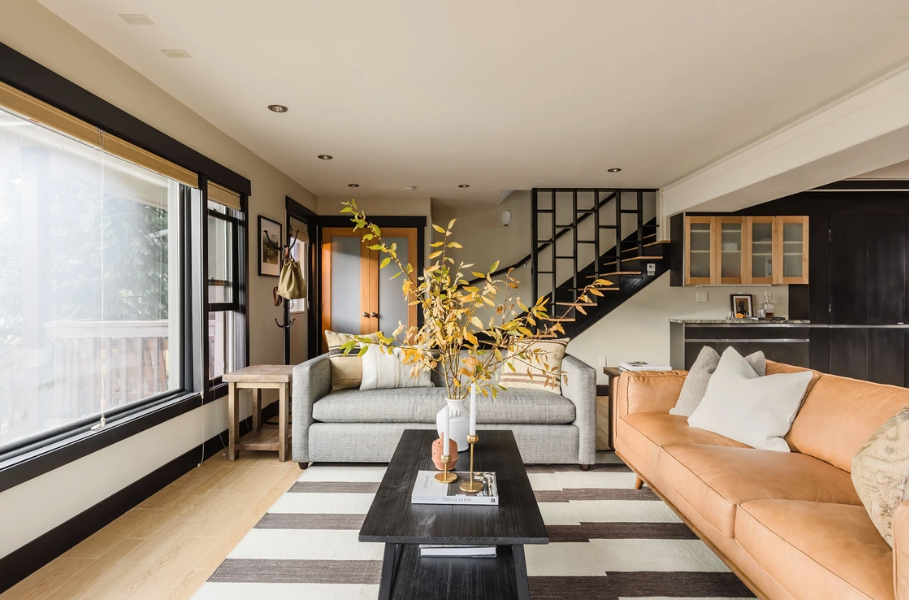
A beautifully staged Airbnb doesn’t just photograph well. It performs better in search, commands higher nightly rates, and converts more browsers into bookings. In a marketplace where guests scroll through dozens of listings in minutes, professional airbnb interior design can be the difference between blending in and standing out.
But how much does design actually impact revenue? From higher occupancy and premium pricing to stronger reviews and repeat stays, strategic upgrades can materially shift your property’s earning potential. In this post, we break down how professional interior design influences Airbnb performance and what kind of return hosts can realistically expect.
TLDR:
- Professional design lifts ADR by 10-25%, with top performers seeing 40-60% gains in competitive markets.
- Properties with quality photography after design work see 10-20% revenue increases immediately.
- A 1-point review score increase lets you raise prices 11.2% without losing bookings.
- Design investments typically pay back within 6-12 months through higher rates and occupancy.
- AvantStay’s in-house design team manages 2,300+ properties with award-winning staging that maximizes ADR.
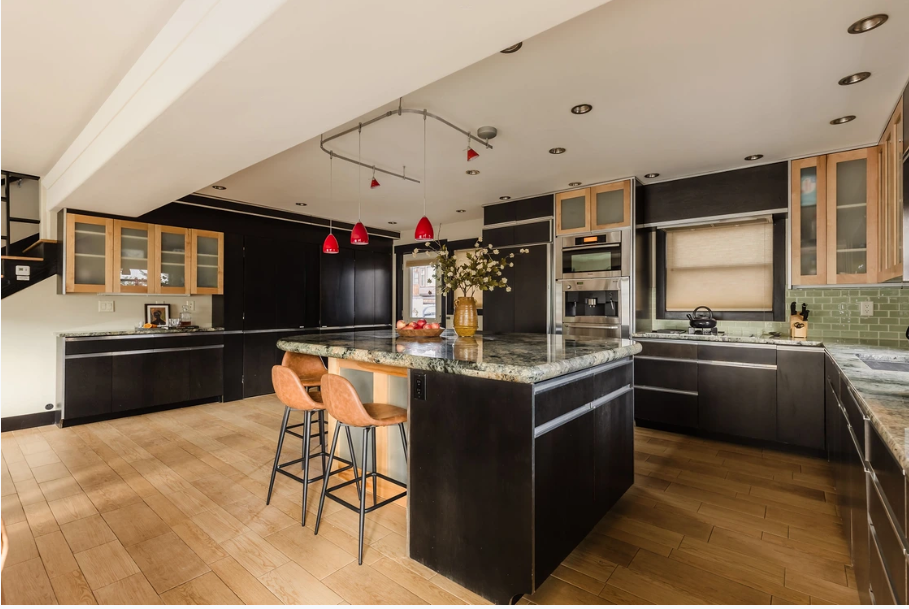
The Real ROI of Professional Interior Design for Airbnb Revenue
Professional interior design delivers measurable returns for your rental property. Property owners who invest in strategic design refreshes typically see ADR increases between 10-25%, with high-performing properties in competitive markets pushing gains to 40-60%. A property earning $200 per night can jump to $250-$320 after a thoughtful redesign.
The revenue impact extends beyond nightly rates. Professional-quality imagery paired with strong design can lift bookings by 24% and total revenue by 40%. When your listing photos showcase a cohesive, well-appointed space, potential guests convert at higher rates because they can visualize their stay before booking.
For a property generating $75,000 annually, a 40% revenue increase translates to an extra $30,000 per year. That kind of lift typically pays back design investment within 6-12 months.
Property Performance Tier | Baseline Annual Revenue | Typical ADR Increase | Revenue Lift Range | Additional Annual Income | Investment Payback Period |
|---|---|---|---|---|---|
Standard Market Property | $50,000 | 10-15% | 10-20% | $5,000 – $10,000 | 12-16 months |
Mid-Tier Market Property | $75,000 | 15-25% | 24-40% | $18,000 – $30,000 | 8-12 months |
Competitive Market Property | $100,000 | 20-30% | 30-45% | $30,000 – $45,000 | 6-10 months |
High-Demand Market Property | $150,000 | 25-40% | 35-50% | $52,500 – $75,000 | 6-8 months |
Premium Destination Property | $200,000 | 40-60% | 45-60% | $90,000 – $120,000 | 4-6 months |
How Interior Design Quality Directly Impacts Nightly Rates
Design quality sets your nightly rate ceiling. Guests pay 20-40% more for properties that deliver a boutique hotel experience versus generic rentals with standard furnishings. The difference comes down to how your space makes potential bookers feel when they view your listing photos.
Premium design creates perceived value that supports higher pricing. Thoughtful color palettes, curated artwork, and intentional furniture placement signal to guests they’re booking something special rather than comparing your rates to budget options nearby. They mentally place your property alongside boutique hotels at $300-500 per night.
This pricing power sustains strong occupancy because superior design attracts guests who prioritize experience and book further ahead for milestone celebrations, corporate retreats, or memorable getaways where the space matters.
The Link Between Design and Booking Conversion Rates
Design quality determines whether a searcher becomes a booker. That first photo of a striking living room or outdoor space creates the scroll-stop moment that separates your property from competitors.
Strong visual storytelling keeps visitors engaged longer and reduces bounce rates. Guests who explore multiple photos of a well-designed space convert at higher rates because they can picture their stay.
Abandoned inquiries drop when design tells a clear story. Inconsistent styling raises quality concerns that kill bookings. Properties that photograph well see faster booking decisions because guests feel confident, spend less time comparison shopping, and have clear expectations from the start.
Professional Photography as the Bridge Between Design and Revenue
Your design investment means nothing until professional photography translates it into bookings. Spaces with upgraded photography after completing design work see 10-20% performance increases. For a property generating $50,000 annually, that delivers $5,000 to $10,000 in added revenue without changing anything physical. At $100,000 in revenue, quality documentation adds $10,000 to $20,000.
Guests scan hundreds of listings in minutes, giving each photo three seconds of attention. Poor lighting, awkward angles, or amateur composition waste the budget you spent creating an exceptional space. Properties joining our portfolio often feature quality furnishings shot poorly, creating a disconnect where the space looks better in person than online. This gap suppresses both occupancy and rates.
Design Elements That Drive the Highest Revenue Gains
Living rooms deliver the strongest return because they appear first in photo galleries and shape expectations for your entire listing. Guests booking group stays make decisions based on gathering spaces, making oversized sectionals, statement lighting, and conversation-friendly layouts worth the investment.
Primary bedrooms influence bookings for properties targeting couples or multi-generational families. Hotel-quality bedding, blackout window treatments, and spa-inspired en-suite bathrooms justify higher nightly rates and help you compete with luxury hotels.
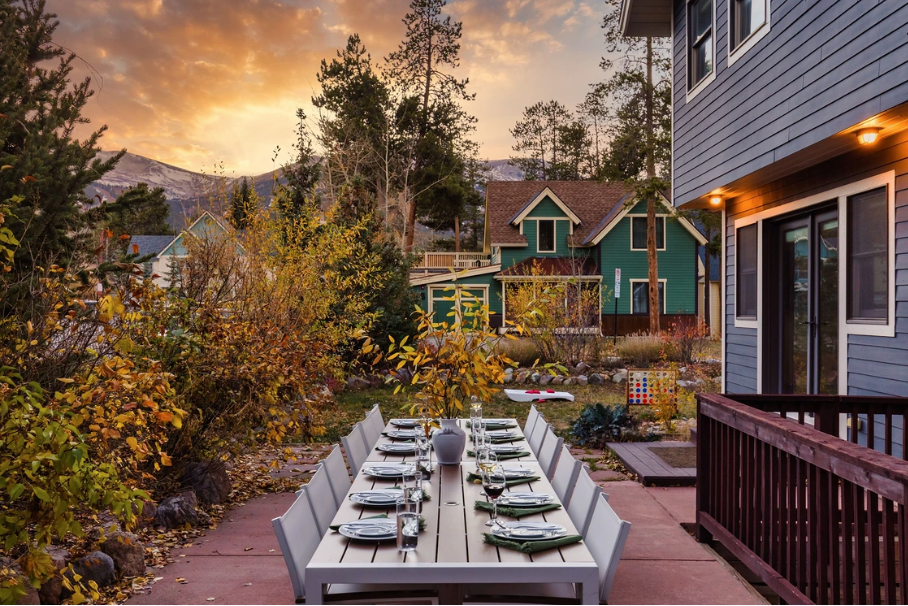
Outdoor living areas generate outsized revenue in destination markets. Fire pits, dining spaces, pool areas, and lounge seating create photo opportunities that drive social sharing. Properties with exceptional outdoor design can command higher rates than comparable homes without outdoor investment, particularly where weather supports year-round use.
The Cornell Study Connection: Design, Reviews, and Pricing Power
Cornell’s Center for Hospitality Research found that a 1-point increase in online review scores lets properties raise prices by 11.2% without losing bookings. For rental owners, this creates a direct path: better design produces better guest experiences, which generate higher ratings, which unlock pricing elasticity your competitors can’t access.
Review scores function as pricing permission slips. A property averaging 4.7 stars that climbs to 4.9 stars can increase rates from $200 to $222 per night while maintaining occupancy. Over 200 annual bookings, that ratings improvement adds $4,400 in revenue without changing your calendar.
Design drives this cycle because guests review what they see and experience. Spaces that exceed expectations generate enthusiastic reviews mentioning specific details: the kitchen layout, bedroom comfort, or outdoor setup. Those specifics convince future bookers to pay your asking rate.
Why Traditional Vacation Rentals Underperform Without Professional Design
Traditional vacation rentals face a professionalization problem. Guests booking in 2026 have spent years staying in properties managed by hospitality-first operators, creating expectations that owner-occupied furniture and personal decor can’t meet. Your rental competes against properties with dedicated design budgets and professional staging, making amateur aesthetics a revenue liability.
Search algorithms on Airbnb and Vrbo prioritize listings with high engagement metrics: click-through rates, time spent viewing photos, and booking conversion. Amateur design produces weaker photos that guests scroll past, pushing your listing down in search results regardless of your pricing or calendar availability. Lower visibility means fewer bookings even if your property offers good value.
Market saturation makes design quality the tiebreaker. Most markets added inventory over the past three years, giving guests more options at every price point. Properties without professional staging blend into search results, forcing owners to compete on price alone or partner with professional management.
How AvantStay’s Award-Winning Design Approach Maximizes Property Performance
We built our in-house design team to solve the challenge property owners face: capturing design-driven revenue gains without managing contractors, procurement, or staging logistics. Our designers handle the complete transformation process, from concept to installation, turning your property into a bookable destination that commands higher rates.
Our approach centers on experiential spaces that guests photograph and share. We create moments: fire pit lounges, chef-ready kitchens, game rooms with foosball and pickleball courts, and outdoor amenities for guests. These features justify rate premiums and generate the visual content that stops scrollers mid-search.
Across 2,300+ properties, we’ve refined what works. Our designs consistently lift both ADR and occupancy because we’re optimizing for booking conversion, not personal taste. Every furniture placement, lighting choice, and color palette serves one goal: making your property the one guests choose and remember.
Final Thoughts on Creating Rental Spaces That Command Premium Rates
Your property’s earning potential depends on whether guests see it as special or generic when they’re scrolling through options. Investing in how to design luxury rental spaces pays off because it gives you pricing power that survives market downturns and seasonal slowdowns.
We help property owners execute these transformations through our vacation rental management services without the typical headaches of coordinating contractors and staging. The properties that win bookings in competitive markets are the ones where every photo tells guests they’re getting an experience, not just a place to sleep.
FAQ
How quickly can professional design investment pay for itself in rental revenue?
Most design investments recover costs within 6-16 months when you factor in ADR increases of 15-25% and occupancy improvements of 8-12%. A property earning $80,000 annually that gains $18,400 in new revenue from design upgrades will recoup a $25,000 investment in about 16 months.
What room improvements deliver the highest revenue returns?
Living rooms generate the strongest returns because they appear first in your listing gallery and influence booking decisions for group stays. Primary bedrooms with hotel-quality finishes justify higher rates for couple-focused properties, while outdoor living spaces can command 15-30% rate premiums in destination markets with year-round favorable weather.
Why do well-designed properties maintain higher occupancy during slow seasons?
Properties with professional staging see 8-12% higher year-round occupancy because thoughtful design attracts bookings when guests have more options and scrutinize quality more carefully. Your shoulder-season months become revenue opportunities instead of vacancy gaps, and better photos push your listing higher in search algorithms.
How does design quality affect my property’s search ranking on Airbnb and Vrbo?
Platform algorithms prioritize listings with high engagement metrics like click-through rates and time spent viewing photos. Professional design produces striking imagery that keeps visitors engaged longer and converts at higher rates, pushing your property higher in search results regardless of pricing or calendar availability.
Can design improvements help me raise rates without losing bookings?
Yes—better design creates pricing power through improved guest experiences and review scores. Research shows a 1-point increase in ratings lets you raise prices by 11.2% without occupancy loss, and guests willingly pay 20-40% more for properties delivering boutique hotel experiences versus generic rentals with standard furnishings.