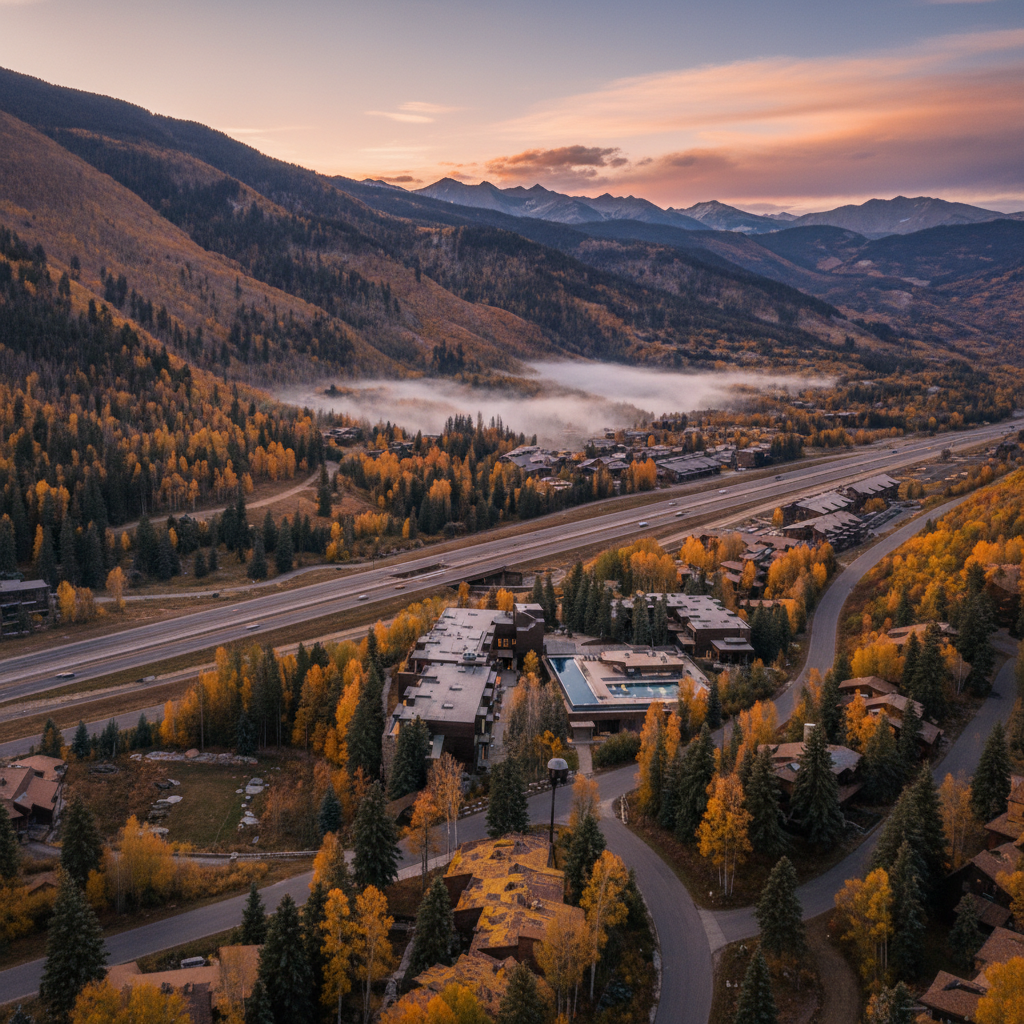
Everyone obsesses over flight times and attraction tickets, but your travel with kids accommodation strategy determines whether you come home refreshed or needing another vacation. The setup you choose creates a domino effect on everything else. Wrong property means exhausted kids, blown meal budgets, and parents with nowhere to retreat after putting everyone to bed. Right property gives you the infrastructure to handle different sleep schedules, dietary needs, and the space each generation actually requires to enjoy the trip instead of surviving it.
TLDR:
- Your accommodation creates a cascading effect on sleep, meals, and sanity during family trips.
- Book one bedroom more than you think you need to create flexibility for different sleep schedules.
- A full kitchen saves $1,500+ per week in dining costs and handles picky eaters without stress.
- Multi-generational trips need first-floor bedrooms for grandparents and separate living zones.
- AvantStay properties feature 4+ bedrooms, oversized dining tables, and on-site entertainment like pools and game rooms designed for group travel.
Why Your Accommodation Choice Determines Your Family Travel Sanity
The difference between a family vacation you’ll treasure and one you’ll need another vacation to recover from often comes down to a single decision: where you sleep. Not the destination you choose or the activities you plan, but the four walls that become your home base for the trip.
When you’re traveling with kids, your accommodation creates a cascading effect on everything else. Pick the wrong setup and you’re dealing with cranky children who didn’t sleep, meals that cost three times your budget because there’s nowhere to cook, and zero downtime because everyone’s crammed into a single hotel room. Pick the right one and suddenly you have breathing room, flexibility, and the space to actually enjoy each other.
Recent research shows 57% of parents planning multi-generational trips now put accommodation needs above destination or activities. That’s not surprising when you consider that your lodging choice affects sleep schedules, meal routines, nap times, and your own ability to decompress after a long day.
Your accommodation does more than provide a place to rest. It’s the infrastructure that either supports or sabotages every other aspect of your trip.
Space Math: Calculating the Real Square Footage Your Family Needs
The standard “one bedroom per couple, kids can share” formula breaks down quickly. A 10-year-old and a 3-year-old operate on different sleep schedules. The toddler crashes at 7 PM while the older kid reads until 9 PM, turning bedtime into a negotiation.
Book one bedroom more than you think you need. That extra room becomes your flexibility buffer: a quiet zone for early risers, a teenager retreat, or a dedicated nap space while older kids stay active.
Living areas deserve equal attention. You need separate zones where a toddler naps while tweens game, where adults sip coffee during kids’ breakfast, where someone takes a call without everyone freezing mid-conversation. Plan for at least two distinct communal spaces beyond bedrooms.
Multi-generational trips amplify these needs. Grandparents require main-floor access and private bathrooms. Parents want a retreat. Kids need somewhere loud. That means five or six bedrooms, multiple living areas, and outdoor space where everyone coexists comfortably.
The Kitchen Advantage: Why Meal Flexibility Saves Your Vacation
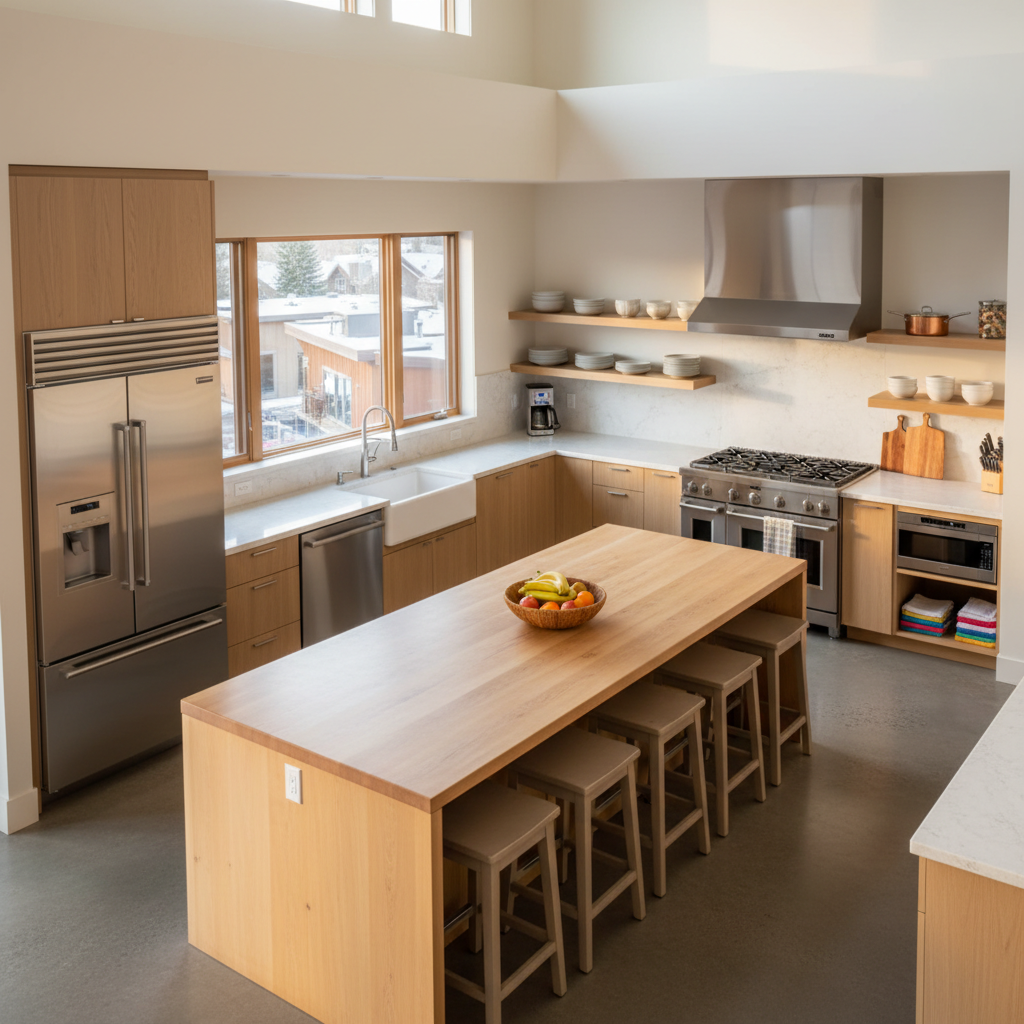
A full kitchen turns meal chaos into meal control. Half of parents now choose properties with kitchen and dining facilities, and the reason goes beyond saving money.
Your four-year-old refuses anything green. Your teenager went vegetarian last month. Your toddler eats breakfast at 6 AM while everyone else sleeps until 8. In a hotel, each scenario requires planning, negotiation, or surrender. With a kitchen, you pour cereal, make toast, and move on with your day.
Late-night hunger hits differently on vacation. Kids burn energy all day and wake up genuinely hungry at 10 PM. Having a fridge stocked with yogurt means you’re not hunting for open restaurants or paying room service premiums.
Separate Bedrooms vs Shared Rooms: The Sleep Strategy That Actually Works
Sleep schedules are your invisible vacation disruptor. A seven-year-old naturally wakes at 6 AM, ready to talk. A teenager’s circadian rhythm keeps them up until 11 PM, scrolling and listening to music. Force them to share a room and nobody wins.
The solution: give each age bracket their own sleep zone. Toddlers and early elementary kids can room together if they share a morning timeline. Tweens and teens need their own spaces for both sleep rhythm differences and the privacy they’re starting to crave. Parents deserve a retreat that isn’t also the hallway to the bathroom.
Consider sound travel between rooms. Corner bedrooms buffer noise better than center ones.
Multi-Generational Travel: Accommodating Three Generations Under One Roof
Nearly half of family vacations now include grandparents alongside parents and kids. Three generations under one roof means managing wildly different needs: grandparents who value quiet mornings and early dinners, parents managing logistics and craving evening downtime, and kids operating at maximum volume from dawn until whenever sleep finally wins.
The right property gives everyone room to coexist. Grandparents need first-floor bedrooms with ensuite bathrooms, eliminating stairs and midnight hallway traffic. A second living area means they can read or watch TV while kids dominate the main space with games and noise. Look for properties with outdoor zones at different activity levels where a quiet patio with lounge chairs sits apart from the pool.
On-Site Entertainment: Properties That Keep Kids Occupied
The 3 PM energy crash hits differently when there’s a pool table in the basement. Instead of hearing “I’m bored” followed by sibling bickering, kids disappear into a tournament while you sit on the patio with coffee.
Pools buy you genuine downtime. Older kids can swim independently while you supervise from a lounge chair, book in hand. Hot tubs give teens their own hangout zone after dinner, creating natural separation from younger siblings without anyone feeling exiled. Properties like Makaha Villa on Oahu include these exact amenities with private pools and multiple outdoor zones perfect for family groups.
Game rooms extend that autonomy indoors. Foosball, ping pong, and shuffleboard keep multiple age groups busy simultaneously. Fire pits turn evenings into events where s’mores happen without you planning anything, eliminating the late-afternoon witching hour when everyone’s tired but dinner is still an hour away.
Location Strategy: Proximity vs Privacy When Traveling With Kids
The classic vacation rental debate: book the condo within walking distance of theme parks and restaurants, or choose the secluded house 20 minutes outside town? With kids, both options carry hidden trade-offs that only reveal themselves after you’ve committed.
Proximity sounds appealing until you’re trying to get toddlers to nap at 1 PM while spring breakers blast music next door. Tourist-heavy areas often mean noise that doesn’t respect bedtime, crowded parking that turns every outing into a scavenger hunt, and public pools where your kids are swimming alongside 50 other families.
Distance gives you control. A residential neighborhood 15 minutes from attractions means quiet mornings, guaranteed parking, and private pools where naptime stays on schedule. Properties like Polo Villas Sands in Coachella Valley offer this balance with private amenities in a peaceful setting. The cost is energy. After a full day, loading exhausted kids into car seats for a 20-minute drive feels brutal.
Match location to your family’s rhythm. High-energy families who stay out until dinner and skip naps do fine closer to action. Families with rigid sleep schedules or sensory-sensitive kids need the retreat a residential location provides.
The Consistency Factor: Professionally Managed Properties vs Individual Hosts
Individual hosts list beautiful photos and promising amenities, but family travel leaves no room for “the hot tub wasn’t actually working” or “cleaning was spotty.” When you arrive with tired kids after a six-hour drive, finding out the WiFi password doesn’t work or the AC is broken isn’t an adventure, it’s a crisis.
Professionally managed properties operate with standardized protocols. Cleaning follows documented checklists between every stay. Smart locks work because someone tests them. When the dishwasher breaks mid-trip, you’re texting a 24/7 support team, not hoping the owner checks their messages.
Families need that predictability. You can’t pivot to a different property at 8 PM when a toddler needs their crib.
How AvantStay’s Group-First Design Solves the Family Travel Accommodation Puzzle
We built our entire portfolio around the idea that groups need different infrastructure than couples. Our properties average four or more bedrooms, with multiple primary suites so parents and grandparents each get private retreats with ensuite bathrooms. No hallway traffic jams at bedtime.
Our design team specs oversized dining tables as standard because eight people need somewhere to eat breakfast together. Kitchens come fully equipped with full-size appliances, cookware, and counter space for actual meal prep.
The experiential amenities solve the “what do we do now” problem. Pool tables, foosball, pickleball courts, and fire pits keep multiple age groups entertained simultaneously without parents planning every minute.
Because we manage every property directly, you’re not gambling on whether the photos match reality. Our 100-point cleaning checklist, 24/7 support through the Butler app, and smart-home tech work the same way at every property.
The Hidden Costs of Getting Accommodation Wrong With Kids
Accommodation Type | Best For | Typical Cost (per night) | Key Advantages | Common Drawbacks |
|---|---|---|---|---|
Hotel Suite | Short trips (1-3 nights), single families | $250-$400 | Daily housekeeping, central location, amenities like pools and breakfast | Limited kitchen facilities, shared walls, no private outdoor space, cramped for 5+ people |
Vacation Rental (2-3 BR) | Couples with 1-2 young kids | $200-$350 | Full kitchen, separate bedrooms, washer/dryer | Too small for multi-generational trips, limited communal space, inconsistent quality |
Large Vacation Home (4+ BR) | Multi-generational travel, extended families, week-long stays | $400-$800 | Multiple living zones, full kitchen saves $1,500+/week on meals, private pool/amenities, space for different sleep schedules | Higher upfront cost (offset by splitting among family), may require car for attractions |
All-Inclusive Resort | Families wanting zero meal planning | $300-$600 | Meals included, kids’ clubs, organized activities | Limited flexibility, crowded facilities, no private space to retreat, dietary restrictions challenging |
The financial hit from the wrong rental goes far beyond the nightly rate. When your two-bedroom condo forces three kids to bunk together, someone’s waking up at 5 AM and waking everyone else. Sleep deprivation ripples through the entire day, turning minor inconveniences into full meltdowns.
No kitchen means you’re eating out for every meal. Breakfast alone runs $80 for a family of five, and that’s before anyone orders chocolate chip pancakes. Over a week-long trip, you’re looking at an extra $1,500 in food costs compared to having a fridge and stove. Dietary restrictions become a negotiation at every restaurant instead of something you control.
The real damage happens in the emotional budget. When there’s nowhere for parents to retreat after bedtime, no quiet corner for an early riser, and no separate space for teenagers who need autonomy, everyone’s patience runs thin. You spend your vacation managing conflicts instead of making memories.
Final Thoughts on Family Vacation Accommodations
You can’t control every variable on a family trip, but you can control where you sleep. Smart family travel accommodation choices give you the infrastructure to handle whatever your kids throw at you, from early wake-ups to dietary restrictions. Start there and the rest of your vacation has room to unfold naturally.
Book one bedroom more than you think you need—it becomes your flexibility buffer for different sleep schedules, quiet zones for early risers, and dedicated nap spaces while older kids stay active.
A full-size fridge, stove, and counter space for real meal prep are non-negotiable; they let you handle dietary restrictions, early-morning breakfasts, and late-night hunger without restaurant runs or negotiations.
Match location to your family’s sleep schedule—high-energy families who skip naps thrive closer to action, while families with rigid bedtimes or sensory-sensitive kids need the control and quiet a residential location 15-20 minutes out provides.
Professionally managed properties follow standardized cleaning protocols, offer 24/7 support teams, and guarantee working amenities, while individual hosts may have inconsistent quality and slower response times—when you arrive exhausted with kids, there’s no room for surprises.
Grandparents need first-floor bedrooms with ensuite bathrooms to eliminate stairs and hallway traffic, plus a separate quiet living area where they can retreat while kids dominate the main space.