You’ve been comparing ski town rental markets, and Telluride stands out with the highest nightly rates in Colorado and appreciation that compounds your rental cash flow. But there’s a zoning designation that determines whether your property qualifies as an investment or essentially functions as a vacation home with token rental income. The Residential Zone classification limits properties to three short-term rentals annually, capping total rental days at 29 per year. Classic License properties face no such restrictions and can operate as full-time rentals. Both property types sit in the same market, often on the same street, trading at comparable prices. The only difference is one generates six figures in annual rental revenue while the other might clear $15,000 if you time those three allowed bookings perfectly around holidays.
TLDR:
- Telluride vacation rentals average $1,096 nightly with 52% occupancy, generating $86K monthly revenue.
- Classic Licenses allow unlimited rentals; Residential Zones cap you at 3 rentals/29 days annually.
- Ski-in/ski-out properties command 20-30% rate premiums during peak season.
- Group-configured homes earn 30-40% more than smaller properties by serving corporate and family bookings.
- AvantStay manages properties in Telluride with AI pricing, end-to-end operations, and Marriott distribution.
Why Telluride Commands Premium Vacation Rental Returns
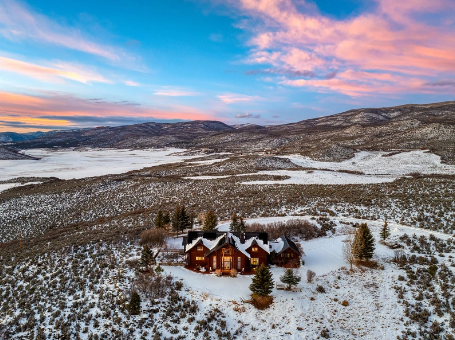
Telluride sits in a box canyon at 8,750 feet, surrounded by 14,000-foot peaks that create one of the most striking settings in Colorado. That geography limits where developers can build, keeping inventory scarce and property values climbing.
Unlike Vail or Breckenridge, Telluride never positioned itself as a mass-market ski town. The lack of interstate access and the four-hour drive from Denver filter out day-trippers and budget travelers. What you get instead are high-net-worth visitors willing to pay top dollar for exclusivity and world-class terrain.
The revenue calendar runs twelve months here. Winter brings serious skiers chasing steep terrain. Summer fills with Bluegrass, Film Festival, and Jazz Celebration attendees who book entire homes. Fall pulls in leaf-peepers and mountain bikers. That diversified demand keeps occupancy rates healthy when single-season markets go quiet.
Understanding Telluride’s Dual-Market Structure
Telluride’s real estate market splits into two distinct zones: the historic Town of Telluride and the purpose-built Mountain Village. Each operates under separate municipal governments with different tax codes, licensing processes, and guest experiences.
Town of Telluride properties trade at a premium. Current pricing trends show the average sold residence runs $2,115 per square foot compared to $1,510 in Mountain Village. That 33% gap reflects the town’s walkable Victorian core, ski-in access via Coonskin and Galloping Goose lifts, and proximity to restaurants and nightlife.
Mountain Village delivers ski-in/ski-out convenience at a lower entry point. Properties here skew newer with condo-hotel configurations and HOA amenities. You’ll face stricter HOA rules but benefit from centralized shuttle access and gondola connections to town.
The tax and licensing split matters. Town properties require a separate business license and collect different lodging taxes than Mountain Village. Some HOAs in Mountain Village restrict short-term rentals entirely or cap rental days per year.
Current Vacation Rental Performance Metrics in Telluride
Telluride ranks among Colorado’s highest-earning rental markets, though returns vary based on property characteristics and seasonal positioning. The average nightly rate sits at $506, placing Telluride near the top of Colorado ski destinations.
Current Airbnb and Vrbo data shows an average $1,100 daily rate with 51% occupancy, translating to roughly $80,100 in annual revenue for actively managed properties.
Seasonality drives performance. Winter weekends and holiday periods push rates 3-4x higher than summer shoulder months, while ski-in access can add 20-30% to nightly rates during peak season.
Understanding Telluride’s Short-Term Rental Regulations
Telluride’s licensing rules separate investor-viable properties from those that can’t generate meaningful rental income. Before you write an offer, you need to know which zone your target property sits in and what that means for your rental calendar.
The Residential Zone designation limits properties to three short-term rentals per year, with a cumulative maximum of 29 days. If your property falls in this category, you’re looking at a personal vacation home with minimal income potential, not a cash-flowing rental investment.
Classic Licenses allow unlimited short-term rentals but only apply to properties outside residential zones. You’ll pay an annual regulatory fee of $857 per bedroom, so a four-bedroom home runs $3,428 in licensing costs before you accept your first booking.
Mountain Village operates under San Miguel County regulations with separate licensing requirements and fee structures. Properties there face different restrictions depending on HOA rules and zoning designations.
Work with a broker who knows which parcels carry Classic License eligibility.
Market Appreciation and Long-Term Value Drivers
Telluride’s real estate market delivers returns beyond rental income. Projections show home values appreciating 5% to 8% annually, creating a dual-income model where monthly rental cash flow compounds with long-term equity gains.
Geography protects those gains. Federal wilderness surrounds the box canyon on three sides, making new development physically impossible in most directions. What little buildable land remains faces strict town planning codes that favor preservation over density.
Vacation rental properties in Telluride qualify for mortgage interest deductions on loans up to $750,000, reducing your taxable rental income. Depreciation schedules let you write off the structure value over 27.5 years, creating paper losses that offset cash flow.
1031 exchanges allow you to sell one rental property and roll proceeds into another without triggering capital gains, building portfolio value across multiple markets. You’ll forfeit primary residence exclusions ($250,000 single, $500,000 married) once a property generates rental income beyond IRS personal-use limits.
Colorado and San Miguel County levy specific lodging taxes on short-term rentals. Town of Telluride properties face different rates than Mountain Village properties, and quarterly filings require careful tracking.
Work with CPAs experienced in Colorado vacation rental investments before closing.
Property Type Selection and Investment Strategy
Your property type choice determines guest demographics, revenue potential, and management complexity in Telluride’s rental market.
Property Type | Avg. Purchase Price | Peak Nightly Rate | Key Advantages | Considerations |
|---|---|---|---|---|
Luxury Single-Family (5+ BR) | $2,115/sq ft | $2,500-$4,000 | Highest absolute returns, attracts corporate/family groups, premium positioning | Higher maintenance, complex turnovers, concierge-level service required |
Condominiums/Townhomes | 40% lower than SFH | $800-$1,500 | Lower entry cost, HOA handles exterior/snow, simpler management | HOA fees, potential rental restrictions, lower rate ceiling |
Ski-In/Ski-Out Properties | 20-30% premium | +20-30% vs comparable | Rate premium during peak season, consistent demand, limited supply | Limited inventory, higher acquisition cost, specific locations only |
Mountain Village Properties | $1,510/sq ft | $1,000-$2,500 | Lower entry point, newer construction, gondola access | Stricter HOA rules, different tax structure, less walkable |
Management intensity scales with property size. Three-bedroom condos require standard cleaning and basic restocking. Seven-bedroom homes need mid-stay cleans, hot tub servicing, coordinated linen rotation, and local contacts for group questions.
Maximizing Group Travel Revenue Potential
Group bookings solve the revenue puzzle in Telluride’s short seasons. A single 10-guest reservation at a six-bedroom home generates the same gross revenue as five two-bedroom condos, with one turnover cost instead of five and half the guest communication overhead.
Properties configured for groups command pricing premiums that smaller homes can’t reach. Six-bedroom estates with multiple living areas and oversized dining tables book at 30-40% higher rates than comparably located four-bedroom properties during peak weeks.
The per-person math makes luxury accessible. A $3,500 weekend night split among twelve guests runs $292 per person, undercutting hotel rooms while delivering private hot tubs, gourmet kitchens, and ski-in access. Corporate retreat planners and multi-generation families represent your highest-value segments, booking longer stays and returning annually when service delivers.
Professional Property Management with AvantStay
We manage properties across Colorado’s premier ski markets, including Breckenridge, Telluride, and Vail. Our vertically integrated model handles the logistical complexity: working through local regulations, coordinating turnovers at altitude with limited labor pools, and maintaining luxury standards through harsh winter conditions.
The Voyage pricing engine calculates 75 to 150 micro-seasons per property, analyzing flight patterns into Montrose, festival calendars, competitor availability, and snowfall data to push rates during powder weeks while protecting occupancy during shoulder months. Our design team converts acquisitions into mountain-luxury destinations with experiential amenities suited for group travel.
The Marriott Bonvoy partnership channels loyalty members directly to your property, expanding your demand beyond OTA browsers to guests actively searching Homes & Villas inventory. You own the asset and appreciation while we run the hospitality operation.

Final Thoughts on Building a Telluride Rental Investment
Few vacation rental investment markets offer Telluride’s combination of supply constraints and demand from guests who value exclusivity over accessibility. The licensing rules and property type choices require more due diligence than turnkey markets, but that complexity protects returns by keeping competition limited. Your investment here becomes both a cash-flowing asset and a scarce real estate position in a box canyon that can’t expand.
We handle the full rental operation for properties in Telluride and across Colorado’s ski markets through our vacation rental management service.
You’ll need a Classic License to run unlimited short-term rentals in Telluride, which costs $857 per bedroom annually and only applies to properties outside residential zones. Properties in residential zones are limited to just three rentals per year totaling 29 days maximum, making them unsuitable for serious rental income.
Actively managed properties in Telluride average $1,096 per night with 52% occupancy, generating roughly $86,120 monthly during peak performance. Your actual returns depend heavily on property location, ski-in access (which adds 20-30% to rates), and whether you target group bookings that command premium pricing.
Town properties trade at $2,115 per square foot versus $1,510 in Mountain Village—a 40% premium that reflects walkable Victorian charm, ski-in lift access, and proximity to nightlife. Mountain Village offers lower entry costs and newer construction but comes with stricter HOA rules and different tax structures that affect your rental operations.
Luxury single-family homes with 5+ bedrooms generate the strongest absolute returns at $2,500-4,000 per night during peak season, especially when configured for group travel with multiple living areas and oversized dining. Condominiums offer simpler entry economics with 40% lower purchase prices and HOA-managed exterior maintenance, though rental restrictions in CC&Rs can limit your revenue potential.
Professional management fees run 20-35% of gross revenue but handle the operational complexity of guest communication, dynamic pricing, and coordinating turnovers in a high-altitude market with limited labor. Self-management saves the fee but demands constant availability for guest inquiries and emergency calls at a luxury price point where service expectations run high.